Work record
The Island of Doctor Moreau
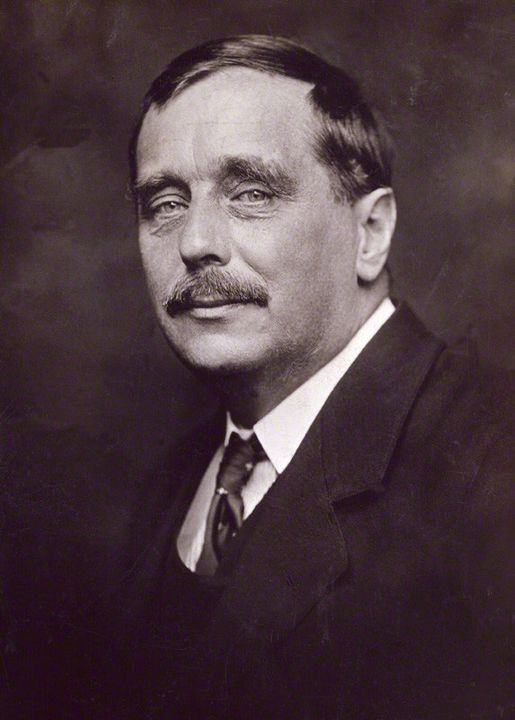
H. G. WellsH. G. Wells; HG Wells; H.G. Wells; H G Wells; HGWells; Herbert George WellsThe Island of Doctor Moreau by H. G. Wells (1896)The Island of Doctor Moreau is Wells's darkest scientific romance, a short horror novel about the attempt to make animals into men.1896 · 19th Century · Novel · English
Abstract
Premise. A castaway is rescued at sea by a ship carrying caged animals and is put ashore on a remote island. Its master is a famous surgeon who fled London after his experiments on living animals became a public scandal.
Discovery. Screams from an enclosure send the narrator into the jungle, where he meets creatures that walk upright and speak but look like beasts. They recite commandments forbidding animal habits and dread the place where they were made.
The scientist's creed. The surgeon calmly explains that he reshapes animals into human form by cutting and grafting, and that he no longer cares about pain. Yet each creature drifts back toward its animal nature.
Collapse. A wounded puma kills the surgeon, his assistant dies in a drunken fight, and the narrator lives alone among the regressing creatures before escaping by sea. In London he sees beasts behind human faces.
For students. The book is a powerful case study in research ethics and in what makes a person human. It pairs well with Genesis, with Frankenstein and with debates on experimentation.
Reception. Reviewers in 1896 called it repulsive and even blasphemous, and the author later described it as a youthful theological grotesque. It appeared at the height of the anti-vivisection campaign.
Main characters
- Edward Prendick: shipwrecked narrator
- Dr. Moreau: exiled physiologist
- Montgomery: drunken assistant
- M'ling: servant creature
- Sayer of the Law: leader of the Beast Folk

Summary
The Island of Doctor Moreau is Wells's darkest scientific romance, a short horror novel about the attempt to make animals into men. It is presented as the account of Edward Prendick, an English gentleman with some training in biology, who is shipwrecked in the Pacific in 1887 and picked up by a schooner carrying a menagerie of animals and a drunken former medical student named Montgomery. Montgomery's strange servant, M'ling, has pointed ears and eyes that shine in the dark. The drunken captain throws Prendick off the ship at a small island, where Montgomery reluctantly takes him in. The island belongs to Dr. Moreau, a once-famous London physiologist driven out of England after a journalist exposed his cruel experiments in vivisection. Prendick hears the screams of a puma under the knife and flees into the jungle, where he meets grotesque, half-human creatures. He believes at first that Moreau is turning men into animals; in fact Moreau is carving animals into human shape through surgery, grafting and hypnotic suggestion. The Beast Folk live in a ravine and chant a Law taught by their Sayer of the Law: not to go on all fours, not to suck up drink, not to eat flesh or fish, not to claw bark of trees, not to chase other men; and they fear Moreau's 'House of Pain'. Moreau explains to Prendick that he is indifferent to pain and pursues only knowledge of the plasticity of living forms. But the creatures always revert. The puma escapes and kills Moreau; Montgomery, drunk, shares brandy with the Beast Folk and is killed in a brawl; the compound burns. Prendick lives alone among the creatures for ten months as they slowly regress to animal life, until he escapes in a drifting boat. Back in London, he cannot shake the sense that the people around him are beasts barely held in human form. Wells wrote the book as a 'theological grotesque', a parable about evolution, cruelty, and a creator without love. For Christian readers it raises strong questions about the image of God, the ethics of experiment, and the difference between law imposed by fear and law written on the heart.
Virtues in this work
Plot or Argument
- Chapters 1-7: Shipwreck and arrival
Prendick is rescued, quarrels with the drunken captain, and is set ashore on Moreau's island with Montgomery and his strange servant.
- Chapters 8-13: The Beast Folk
Hearing the puma's screams, Prendick flees, meets the Beast Folk and hears the Law, and fears he will be made into an animal.
- Chapters 14-16: Moreau explains
Moreau reveals that he shapes animals into men by surgery and describes his indifference to pain.
- Chapters 17-22: Collapse
The puma kills Moreau, Montgomery dies, and Prendick lives among regressing creatures before escaping to England, haunted.
Characters
- Edward Prendick, narrator
Shipwrecked gentleman with biological training.
- Dr. Moreau, scientist
Brilliant, cold vivisector who carves animals into human shape.
- Montgomery, assistant
Drunken former medical student, Moreau's helper.
- M'ling, servant
Bear-dog creature devoted to Montgomery.
- Sayer of the Law, Beast Folk leader
Grey creature who recites the Law.
- Dog Man, companion
Faithful creature who follows Prendick.
Lessons
Knowledge without love
Moreau claims indifference to pain. Wells shows the cruelty of science cut off from compassion.
- How does Moreau justify his work?
- What limits should be placed on research?
Law and nature
The Beast Folk obey a Law out of fear, but their natures do not change.
- Why do the Beast Folk revert?
- Compare Jeremiah 31:33 and the law written on the heart.
The image of God
Prendick returns home seeing beasts in human faces. The novel asks what makes humans truly human.
- What does Prendick fear at the end?
- What does Genesis 1:27 say about human dignity?
Context
The novel appeared during fierce Victorian debates about vivisection and evolution. Wells, Huxley's student, imagined the consequences of treating species as endlessly malleable.
Composition
Published by Heinemann in 1896 and condemned by many reviewers as blasphemous and horrifying.
Reception
Now regarded as a key early work of science fiction and of the ethics of experimentation; widely adapted.
Comparisons
- Frankenstein
Another creator who makes living beings without love and suffers the consequences.
- The Time Machine
Wells's first romance, also about human regression.
- Gulliver's Travels
Swift's Houyhnhnms and Yahoos also blur the line between animal and human.
Quotes
“Not to go on all-fours; that is the Law. Are we not Men?”
“The study of Nature makes a man at last as remorseless as Nature.”
For Students
A reading companion for classical Christian high school students. See the student guide.
Reading Guide
Watch for
- The Law and how it is enforced.
- Moreau's explanation of his methods.
- Montgomery's relationship with the Beast Folk.
- Prendick's state of mind in London.
Key terms and names
- Vivisection
- Surgery on living animals for research.
- House of Pain
- The Beast Folk's name for Moreau's laboratory.
- Reversion
- Return to an earlier, more animal state.
- Sayer of the Law
- Creature who recites the Law to the Beast Folk.
Seminar Questions
- Comprehension What does Prendick first believe Moreau is doing?
- Comprehension How does Moreau die?
- Interpretation Why do the Beast Folk revert?
- Interpretation What does Wells suggest about a creator without love?
- Interpretation Why is Prendick unable to live normally in London?
- Big Question What makes a human being truly human?
Faith Connections
- Genesis 1:27 (Scripture)
Humans are made in the image of God; the novel shows the horror of trying to manufacture humanity.
- Proverbs 12:10 (Scripture)
A righteous man regardeth the life of his beast; Moreau's cruelty violates this.
Logic and Rhetoric
Central argument: Science pursued without compassion becomes cruelty, and human dignity cannot be made by force or surgery.
Rhetorical device: parable. The island is a closed world in which Moreau acts as a cruel creator and the Law parodies religious commandment.
Debate: Resolved: that Moreau's pursuit of knowledge was entirely unjustified.
Memory Work
Not to go on all-fours; that is the Law. Are we not Men?
Writing Prompts
Essay: Compare Moreau and Victor Frankenstein as creators.
Comparison with Frankenstein: Compare the creators' responsibilities to their creatures.
Medical Lens
The novel is a classic literary treatment of vivisection and research ethics; it depicts surgery without consent, pain inflicted for knowledge, and alcoholism.
- Ch. 14
Moreau explains his methods of grafting and surgical reshaping.
- Ch. 8-10
The screams of the puma under the knife.
- Ch. 19-20
Montgomery's drunken collapse.
Creative Prompts
- Essay
Is Moreau a scientist or a false god? Argue from the text.
- Dialogue
Write a debate between Moreau and a Christian physician on the ethics of experiment.
- Classroom
Research the Victorian anti-vivisection movement and present its arguments.
Further Reading
- Frankenstein, Mary Shelley
The founding novel of the science gone wrong.
Verification notes
Plot and publication history are well established.
No verification flags recorded.