Work record
Travels in Alaska
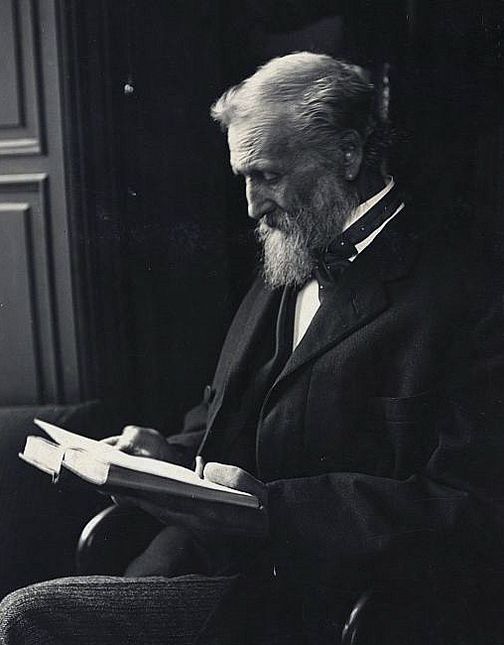
John MuirTravels in Alaska by John Muir (1915)Travels in Alaska is the book John Muir was finishing when he died in December 1914, an account of three of his journeys to southeastern Alaska, published the next year.1915 · Early 20th Century · Travel · English
Abstract
Background. In his last years the Sierra Club founder turned decades of northern field notes into a single narrative; he died with it almost done, and an assistant readied it for print.
Scope. Three voyages along the Inside Passage are covered: a first season of river trips, a mountain accident and a late-autumn canoe expedition; a second summer among fiords; and a solitary camp a decade later.
Content. Episodes include a rescue on a cliff at night, the finding of a vast inlet of ice that had opened since Vancouver's survey, feasts and speeches in Native villages, the killing of a beloved captain in a feud, a lone sled journey and a near-drowning, and the shimmering lights of the polar sky.
Method. Muir writes as a field scientist and storyteller, joining measurement of advancing and retreating ice to vivid description, humor, ethnographic notes and frequent praise of the Creator. Long journal-style passages alternate with reflective summaries written decades after the events.
Themes. Living glaciers as makers of landscape, courage and friendship, debt to Native guides, mission and culture, and creation as God's temple.
Significance. This posthumous volume made the bay and the glacier bearing his name famous, and it remains a classic of northern travel literature and of glacial natural history.
Key figures
- John Muir: Narrator and glacier explorer
- S. Hall Young: Presbyterian missionary and travel companion
- Toyatte: Stickeen Tlingit chief who captained the canoe
- Sitka Charley: Young Tlingit guide who led the party to Glacier Bay
- Kadachan: Son of a Chilcat chief, crew member

Summary
Travels in Alaska is the book John Muir was finishing when he died in December 1914, an account of three of his journeys to southeastern Alaska, published the next year. It is arranged in three parts, the trips of 1879, 1880 and 1890, and ends, unfinished, with a description of the northern lights. Part I begins in 1879, when Muir, after eleven years among the Sierra glaciers, sails north past Puget Sound and British Columbia to Fort Wrangell. Alaska, he writes, is one of the most wonderful countries in the world for the lover of pure wildness. Based at Wrangell among Presbyterian missionaries, he goes up the Stickeen River to its glaciers, climbs a mountain near Glenora with the young missionary S. Hall Young, who falls, dislocates both arms and must be brought down the cliffs by Muir through the night, and later joins a mission excursion on the steamer Cassiar and travels the Cassiar gold trail. In October he hires a canoe and a Tlingit crew, the old Stickeen chief Toyatte, Kadachan, John and Sitka Charley, and with Young paddles north through storms. Guided by Charley's memory of a bay full of ice-mountains, they reach the great inlet now called Glacier Bay, which Muir explores and sketches in rain and snow. They visit the Chilcat people, where Muir and Young are asked to speak, and return to Wrangell. A chapter on the Tlingit describes their houses, customs, religion and feuds, and tells how Toyatte, a church member, was shot when he stood with his young men in a quarrel with the Taku. Part II follows the 1880 voyage with Young to Sum Dum Bay, the Taku River and Taylor Bay, the scene of the adventure with the dog Stickeen, and back to Glacier Bay, where Muir measures the retreat of the ice. Part III, the trip of 1890, finds Muir camped alone near the great glacier that now bears his name. Hoping to cure a lingering cough, he drags a light sled across the ice for days, sleeps on the glacier, and nearly drowns when he plunges into a hidden water-filled crevasse. The book closes with his long description of auroras over the bay. Throughout, Muir mixes glacial science with praise, calling a great glacier one of God's own temples, and records Native life with curiosity and respect. The text was prepared for the press by Marion Randall Parsons, with a preface by William Frederic Badè.
Virtues in this work
- Fortitude: Muir paddles through autumn storms, crosses glaciers alone and survives a plunge into a hidden crevasse on the Muir Glacier.
- Charity: He refuses to leave the injured Young on Glenora Peak and brings him down the cliffs through the night.
- Piety: He thanks the Lord for a glorious glacier day and describes the glaciers as God's own temples.
- Magnanimity: He honors the courage and skill of his Tlingit crew, above all Toyatte, whom he calls the noblest of them all.
Plot or Argument
- Preface (William Frederic Badè)
Badè introduces the book as Muir's last work, written in 1912-1914 and left unfinished in the middle of the 1890 trip, and credits Marion Randall Parsons with preparing it.
- Chapters I-III: To Fort Wrangell
The voyage north in 1879 through Puget Sound, British Columbia and the Alexander Archipelago; Muir's home among the missionaries at Wrangell and his observations of the island's forests and weather.
- Chapter IV: The Stickeen River
A steamer trip up the Stickeen to Glenora; Muir and S. Hall Young climb a mountain near the trading-post, Young falls and dislocates both arms, and Muir works him down the cliffs in darkness.
- Chapters V-VII: The Cassiar and Glenora Peak
A mission cruise on the steamer Cassiar among glaciers and the ruins of a deserted Native village, travel on the Cassiar trail of the gold miners, and Muir's solitary climb of Glenora Peak for its view of the Coast Range.
- Chapter VIII: Exploration of the Stickeen Glaciers
Muir returns to explore the great glaciers that pour into the Stickeen valley, walking far up one of them and studying their advance and retreat.
- Chapters IX-X: The Canoe Voyage and the Discovery of Glacier Bay
In October 1879 Muir hires Toyatte, Kadachan, John and Sitka Charley, paddles north with Young, and on Charley's report reaches the ice-filled bay now called Glacier Bay.
- Chapters XI-XIII: The Chilcats, the Return and Alaska Indians
Visits and speeches among the Chilcat and Hoona people, the voyage back to Wrangell, and a chapter on Tlingit customs that tells of Toyatte's death in a feud.
- Part II, Chapters XIV-XVI: The Trip of 1880
A return voyage with Young to Sum Dum Bay, the Taku River and Taylor Bay, and to Glacier Bay to compare the glaciers with his sketches of the year before.
- Part III, Chapters XVII-XVIII: The Trip of 1890
Muir camps near the Muir Glacier, then drags a sled alone across its upper reaches for days and survives a plunge into a hidden water-filled crevasse.
- Chapter XIX: Auroras
The book ends with Muir's descriptions of the northern lights over Glacier Bay, where the manuscript breaks off.
Characters
- John Muir, narrator
Naturalist and glacier explorer making his first long journeys in Alaska.
- S. Hall Young, missionary companion
Presbyterian missionary at Fort Wrangell who shares the canoe voyages of 1879 and 1880.
- Toyatte, canoe captain
Aged Stickeen chief and church member who owns and captains the canoe; later killed in a feud.
- Kadachan, crew member
Son of a Chilcat chief who paddles and guides on the 1879 voyage.
- Sitka Charley, guide
Youngest of the crew, who remembers a bay full of ice-mountains from his boyhood and leads them to Glacier Bay.
- John, interpreter
Stickeen crew member who interprets for Muir and Young.
Lessons
Courage and care for a companion
When Young falls on a mountain near Glenora and dislocates both arms, Muir does not abandon him but works him down the cliffs through the night. The episode shows that a love of adventure must be joined to responsibility for others.
- What went wrong on the climb near Glenora?
- How does Muir get Young down the mountain?
- What does a good leader owe to those who travel with him?
Listening to local knowledge
Muir finds Glacier Bay because Sitka Charley remembers hunting seals there as a boy. The Tlingit crew's seamanship, weather wisdom and memory make the exploration possible, and Muir records his debt to them.
- How did Charley know about the bay?
- What skills did Toyatte and the crew bring to the voyage?
- Why is it important to learn from people who know a place?
Creation as a temple
After exploring a glacier Muir writes that he had been in one of God's own temples and had seen and heard Him working. His science deepens rather than replaces his wonder at the Creator.
- What does Muir see at the glacier that leads to this language?
- How can scientific study lead to worship?
- Where have you felt that you were in one of God's temples?
Peacemaking and its cost
Toyatte, a Christian, refuses to fight in the feud with the Taku but will not hide while his young men face danger, and he is shot. His death raises hard questions about loyalty, peacemaking and the call to turn the other cheek.
- Why does Toyatte refuse to go into the fort?
- How does Mr. Young try to stop the fight?
- Was Toyatte's choice right? Why or why not?
Context
The United States bought Alaska from Russia in 1867 but gave it little government for decades. Fort Wrangell, near the mouth of the Stikine River, was a supply town for the Cassiar gold mines in British Columbia, and Presbyterian missionaries such as S. Hall Young and Sheldon Jackson had begun schools and churches among the Tlingit. Glacier Bay, which Vancouver's 1794 chart showed as filled with ice, had since opened as the glaciers retreated. Steamers began carrying tourists to the Muir Glacier in the 1880s.
Composition
Muir drew on journals kept over more than thirty years. He began the book after returning from a world tour in 1912, worked on it through the Hetch Hetchy controversy and illness, and left it nearly complete at his death on December 24, 1914. Marion Randall Parsons, who had assisted him, prepared the manuscript, and Houghton Mifflin published it in 1915 with a preface by William Frederic Badè, Muir's literary executor.
Reception
Published as Muir's last book, it was welcomed as a fitting end to his career and became a classic of Alaska travel writing. It helped fix Glacier Bay and the Muir Glacier in the American imagination; Glacier Bay was proclaimed a national monument in 1925 and later became a national park. Its account of the Tlingit is a valuable, if period-bound, record.
Comparisons
- Stickeen
The dog story is the most famous episode of the 1880 voyage; this book gives the full journey around it.
- The Voyage of the Beagle
Darwin's and Muir's travel journals both combine geology, natural history and encounters with native peoples; both young naturalists came home with ideas that shaped their lives' work.
- The Call of the Wild
London's Klondike novel and Muir's travels both picture the northern wilderness of the gold-rush era, one as a harsh test of survival, the other as a temple of glaciers.
- My First Summer in the Sierra
The Sierra journal of 1869 shows Muir first reading glaciers in granite; in Alaska he finds living glaciers still at work.
- The Mountains of California
Muir's glacial theory of the Sierra, argued there, is confirmed for him by the tidewater glaciers he watches in Alaska.
Quotes
Frequently cited
“I am hopelessly and forever a mountaineer”
Frequently cited
“To the lover of pure wildness Alaska is one of the most wonderful countries in the world”
Frequently cited
“feeling that in very foundational truth we had been in one of God’s own temples and had seen Him and heard Him working and preaching like a man”
“He then told me that both of his arms were dislocated”
“thanking the Lord for so noble an addition to my life as was this one big mountain, forest, and glacial day”
“At the first fire Toyatte fell, shot through the breast. Thus died for his people the noblest old Roman of them all”
“Glacier Bay is undoubtedly young as yet”
For Students
A reading companion for classical Christian high school students. See the student guide.
Reading Guide
Watch for
- Muir's first impressions of the islands and forests of the Alexander Archipelago.
- The fall on the mountain near Glenora in Chapter IV and how Muir responds.
- The role of Sitka Charley and the crew in the discovery of Glacier Bay.
- How Muir describes Tlingit customs, speeches and beliefs, and where his views reflect his own time.
- Muir's solitary sled trip of 1890 and the final chapter on auroras.
Key terms and names
- Tidewater glacier
- A glacier that flows all the way to the sea and breaks off into icebergs.
- Tlingit
- The Native people of southeastern Alaska, including the Stickeen, Chilcat, Hoona and Taku groups Muir met.
- Fort Wrangell
- Town near the mouth of the Stikine (Stickeen) River, Muir's base in 1879 and 1880.
- Glacier Bay
- A great ice-filled inlet west of Juneau, explored by Muir in 1879, now a national park.
- Muir Glacier
- The great tidewater glacier in Glacier Bay named for Muir, where he camped in 1890.
- Chinook jargon
- A trade language of the Pacific Northwest; the book ends with a glossary of its words.
- Aurora
- The northern lights, glowing bands and curtains of light in the night sky.
Seminar Questions
- Comprehension Who were the members of Muir's canoe crew in 1879, and what did each contribute?
- Comprehension How did Muir learn about the bay full of ice-mountains?
- Comprehension Why did Muir take his sled onto the Muir Glacier in 1890, and what danger did he meet?
- Interpretation How does Muir portray Toyatte, and why does he call him the noblest old Roman of them all?
- Interpretation What does Muir mean by calling a glacier one of God's own temples?
- Interpretation Where does Muir show respect for the Tlingit, and where does he judge them by the standards of his own time?
- Big Question What makes an explorer a discoverer when other people already know a place?
- Big Question How should Christians share the gospel with people of another culture, as Young tried to do?
Faith Connections
- Psalm 148:7-10 (Scripture)
The psalm calls on snow, ice, stormy wind, mountains and all creatures to praise the Lord, a fitting text for Muir's glaciers, storms and auroras.
- Matthew 5:39 (Scripture)
Young reminds the Stickeen Christians that Christ told them to turn the other cheek; Toyatte's death shows how hard that command is in a culture of blood feud.
- John 15:13 (Scripture)
Muir's account of Toyatte, the old Stickeen chief who guided his canoe voyages, ends at Fort Wrangel, where the chief refuses shelter, stands without a gun beside his young men to share their danger, and falls at the first fire; Muir writes that he died for his people, and Christ's words on laying down one's life fit that choice.
Logic and Rhetoric
Central argument: The glaciers of Alaska are still at work making landscapes, as the ancient ice once made the Sierra. Watching them shows the Creator's method in action. Therefore Alaska is both a laboratory for science and a temple for worship, worth every hardship of reaching it.
Rhetorical device: metaphor. Muir calls a glacier a grand old landscape mill and, in the same passage, one of God's own temples where he had seen Him working and preaching like a man.
Debate: Resolved: that Muir was justified in exploring Glacier Bay in the stormy season of 1879.
Memory Work
To the lover of pure wildness Alaska is one of the most wonderful countries in the world
feeling that in very foundational truth we had been in one of God’s own temples and had seen Him and heard Him working and preaching like a man
Writing Prompts
Essay: Muir praises the courage of his companions as well as the beauty of Alaska. Choose one companion, Young, Toyatte or Sitka Charley, and explain what Muir admired in him.
Comparison with The Voyage of the Beagle: Compare how Darwin in The Voyage of the Beagle and Muir in Travels in Alaska describe the native peoples they meet. What do they admire, and what do they misunderstand?
Medical Lens
Several passages concern health and injury. On a mountain near Glenora Young falls and dislocates both arms; Muir binds them to his sides with his suspenders and necktie to limit movement and brings him down at night. In 1890 Muir undertakes his sled trip partly to rid himself of a bronchial cough that had lingered for three months after the grippe, and reports that it improved each day on the ice. The chapter on the Tlingit describes the illegal distilling of hootchenoo, which set off the quarrel that killed Toyatte. These are lay accounts.
- Chapter IV
Young's fall on a mountain near Glenora, his two dislocated arms, and Muir's improvised binding and night descent.
- Chapter XIII
Illegal distilling of hootchenoo from molasses and its part in the feud in which Toyatte was shot.
- Chapter XVIII
Muir sets out on the glacier hoping to cure a three-month cough after the grippe and reports that it cleared on the ice.
Creative Prompts
- Classroom
Trace Muir's 1879 canoe route on a map of southeastern Alaska from Fort Wrangell to Glacier Bay and the Chilcat country, marking each chapter's main stop.
- Essay
Using Chapters IX through XIII, describe what Muir learned from Toyatte, Kadachan, John and Sitka Charley, and how he portrays them.
- Fiction
Write the discovery of Glacier Bay from Sitka Charley's point of view, remembering the bay he saw as a boy.
- Dialogue
Write the conversation between Muir and Young on the cliffs near Glenora after Young's fall.
- Poetry
Write a poem about the auroras over Glacier Bay, drawing on the images in the final chapter.
Further Reading
- Stickeen, John Muir
- Alaska Days with John Muir, S. Hall Young
Muir's companion tells the same journeys, including Glenora Peak and Stickeen.
- The Cruise of the Corwin, John Muir
His journal of the 1881 Arctic voyage, published 1917.
- The Life and Letters of John Muir, William Frederic Badè
- Son of the Wilderness: The Life of John Muir, Linnie Marsh Wolfe
Verification notes
The three-part arrangement, chapter titles, Badè's preface (dated May 1915), the crew of 1879, Young's fall near Glenora, the October 1879 voyage to Glacier Bay, Toyatte's death, the 1890 sled trip and crevasse, and the closing chapter on auroras were checked against the attached Gutenberg text. The 1915 Houghton Mifflin publication, Glacier Bay's later status as a national monument (1925) and national park, and Sheldon Jackson's role follow standard references. Quotes were checked against the attached text.
- The year of the Toyatte feud, which the text tells in Chapter XIII without a clear date.
- How far Marion Randall Parsons edited or arranged the final chapters.