Work record
The Sacred Wood
T. S. EliotT. S. Eliot; TS Eliot; T.S. Eliot; T S Eliot; TSEliot; Thomas Stearns EliotThe Sacred Wood by T. S. Eliot (1920)The Sacred Wood: Essays on Poetry and Criticism is T. S. Eliot's first book of prose criticism, published in London by Methuen in 1920.1920 · Early 20th Century · Essays · English
Abstract
Background. Eliot's first prose collection appeared from Methuen in London in 1920. It gathered reviews and articles, several written for London periodicals, in the years just before he published The Waste Land. Its title page bears the publisher's London address and the date 1920.
Argument. Criticism, Eliot holds, should be analytical rather than impressionistic, and should judge poems rather than poets. A writer must acquire, by labour, a sense of the whole of earlier literature as a living order that every new work modifies. The poet's mind works like a catalyst, and art requires the surrender of personality. Feeling in drama must be embodied in objects and events, which Shakespeare's Hamlet, Eliot argues, fails to achieve. Good poets, he adds, transform what they borrow.
Structure. An introduction, The Perfect Critic, a group of short pieces on critics, Tradition and the Individual Talent, essays on verse drama and Elizabethan dramatists, and closing studies of Swinburne, Blake and Dante.
Themes. Tradition and originality, impersonality, the work of the critic, borrowing and imitation, the decline and possible revival of verse drama, and the relation of emotion to form.
Significance. Its key terms, the historical sense and the objective correlative, became fixtures of twentieth-century criticism and prepared the ground for the close reading of the New Critics.
Key figures
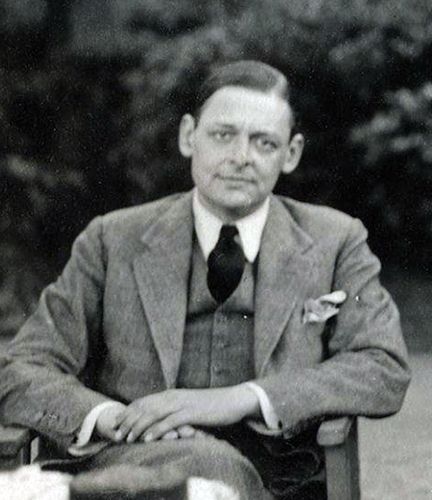
- T. S. Eliot: American-born poet and critic living in London
- Matthew Arnold: Victorian critic whose example Eliot weighs
- William Shakespeare: Dramatist whose Hamlet Eliot judges an artistic failure
- Philip Massinger: Jacobean dramatist and subject of the essay on poetic borrowing

Summary
The Sacred Wood: Essays on Poetry and Criticism is T. S. Eliot's first book of prose criticism, published in London by Methuen in 1920. Eliot was then a young American poet working in a London bank and writing reviews for periodicals; a note in the book says that several essays first appeared in The Times Literary Supplement, The Athenaeum, Art and Letters and The Egoist. The book gathers an introduction and essays on the nature of criticism, on particular critics, on poetic drama, and on poets from Marlowe and Shakespeare to Blake and Dante. The introduction and The Perfect Critic take Matthew Arnold and Coleridge as reference points and ask what a critic should do. Eliot criticizes impressionistic and merely emotional criticism and argues that the true critic works through close comparison and analysis, with feeling and intelligence joined. A group of shorter pieces, Imperfect Critics, judges Swinburne, George Wyndham, Charles Whibley, Paul More and Irving Babbitt, and Remy de Gourmont. The best-known essay, Tradition and the Individual Talent, argues that tradition cannot be inherited but must be obtained by great labour. It requires the historical sense, a perception of the past as present, and it means that no poet has his complete meaning alone. The existing monuments of literature form an ideal order that each new work slightly alters. Eliot then describes the poet's mind as a catalyst, comparing it to a bit of finely filiated platinum, and claims that poetry is not a turning loose of emotion but an escape from emotion, and that an artist's progress is a continual extinction of personality. Several essays consider poetic drama. Hamlet and His Problems argues that the play, not the prince, is the real problem, judges it an artistic failure, and introduces the objective correlative: a set of objects, situation or chain of events that is the formula of a particular emotion. Essays on Marlowe's blank verse, Ben Jonson and Philip Massinger include the remark that immature poets imitate while mature poets steal. The book ends with short essays on Swinburne as poet, Blake and Dante. The Sacred Wood shaped the critical vocabulary of the twentieth century and influenced the close reading later taught by the New Critics.
Virtues in this work
Plot or Argument
- Introduction and The Perfect Critic
Eliot weighs Arnold and Coleridge and argues that criticism should join feeling and intelligence through comparison and analysis, not mere impression.
- Imperfect Critics
Short studies of Swinburne, Wyndham, Whibley, More and Babbitt, and Remy de Gourmont, each showing a particular strength or failure in criticism.
- Tradition and the Individual Talent
Tradition must be obtained by labour; the historical sense sees the past as present; a poet's work is valued in relation to the dead; poetry is an escape from personality.
- Poetic drama
The Possibility of a Poetic Drama, Euripides and Professor Murray, and Rhetoric and Poetic Drama ask why modern verse drama fails and how it might revive.
- Hamlet and His Problems
The play is the primary problem; Shakespeare could not find an objective correlative for Hamlet's emotion, so the play is an artistic failure.
- Elizabethan and Jacobean poets
Essays on Marlowe's blank verse, Ben Jonson and Philip Massinger judge how poets borrow and transform language.
- Swinburne, Blake and Dante
Closing essays find Swinburne's diffuseness essential to his verse, praise Blake's peculiar honesty, and consider Dante's poetry.
Lessons
Tradition is earned
Eliot argues that tradition cannot be inherited but must be obtained by great labour, through a historical sense that sees the past as present. Classical Christian education rests on a similar conviction: students enter the great conversation by study, not by birth.
- What does Eliot mean by the historical sense?
- Why does he say no poet has his complete meaning alone?
- How does your own schooling try to give you a tradition?
Escape from personality
Eliot claims that poetry is not the expression of personality but an escape from it, and that the artist's progress is a continual self-sacrifice. Students can compare this with Christian teaching on self-denial and with the Romantic view of poetry as self-expression.
- What is Eliot rejecting when he says poetry is an escape from emotion?
- How does the catalyst image explain his theory?
- Is self-denial a fitting model for an artist?
The objective correlative
In Hamlet and His Problems Eliot says that emotion in art must be expressed through a set of objects, a situation or a chain of events that is its formula. The idea gives students a test for whether a poem or scene earns the feeling it asks for.
- Define the objective correlative in your own words.
- Why does Eliot think Hamlet lacks one?
- Find an example of an objective correlative in a poem you know.
Context
Eliot published The Sacred Wood in 1920, after the First World War and two years before The Waste Land. He was working at Lloyds Bank in London and reviewing widely, and the book helped establish him as a critic as well as a poet.
Composition
The essays were collected from reviews and articles, several of which first appeared, in the same or a more primitive form, in The Times Literary Supplement, The Athenaeum, Art and Letters and The Egoist. Tradition and the Individual Talent first appeared in two parts in The Egoist. The stored text is the 1920 first edition published by Methuen & Co. in London.
Reception
Tradition and the Individual Talent and Hamlet and His Problems became two of the most cited critical essays of the century; the terms historical sense, impersonality and objective correlative entered the vocabulary of literary study and influenced the New Criticism.
Comparisons
- Hamlet
The subject of Hamlet and His Problems, where Eliot calls the play an artistic failure and introduces the objective correlative.
- The Waste Land
Eliot's poem of 1922 puts into practice the impersonality, allusion and use of tradition argued for in this book.
- Poetics
Aristotle's analysis of tragedy stands behind Eliot's concern with poetic drama and with the critic as analyst.
Quotes
Frequently cited
“No poet, no artist of any art, has his complete meaning alone.”
Frequently cited
“Poetry is not a turning loose of emotion, but an escape from emotion; it is not the expression of personality, but an escape from personality.”
Frequently cited
“The progress of an artist is a continual self-sacrifice, a continual extinction of personality.”
Frequently cited
“The only way of expressing emotion in the form of art is by finding an “objective correlative””
Frequently cited
“Immature poets imitate; mature poets steal; bad poets deface what they take, and good poets make it into something better, or at least something different.”
“Tradition is a matter of much wider significance. It cannot be inherited, and if you want it you must obtain it by great labour.”
For Students
A reading companion for classical Christian high school students. See the student guide.
Reading Guide
Watch for
- The judgment of Matthew Arnold in the introduction and The Perfect Critic.
- The definition of the historical sense in Tradition and the Individual Talent.
- The image of the finely filiated platinum as a catalyst.
- The definition of the objective correlative in Hamlet and His Problems.
- The remark about how poets borrow in Philip Massinger.
Key terms and names
- Historical sense
- Eliot's term for a perception of the past not only as past but as present in one's own writing.
- Tradition
- For Eliot, the whole order of earlier literature, obtained by labour rather than inherited.
- Impersonality
- Eliot's view that poetry escapes from the poet's personality rather than expressing it.
- Objective correlative
- A set of objects, a situation or a chain of events that is the formula of a particular emotion in art.
- Catalyst
- Eliot's image for the poet's mind, which combines feelings into a new whole without itself being changed.
Seminar Questions
- Comprehension What does Eliot say tradition requires of a poet?
- Comprehension How does Eliot define the objective correlative?
- Interpretation Why does Eliot compare the poet's mind to a filament of platinum?
- Interpretation Why does Eliot judge Hamlet an artistic failure, and is his argument persuasive?
- Interpretation What does Eliot mean by saying mature poets steal?
- Big Question Is great art an expression of the self or a surrender of the self?
Faith Connections
- Matthew 16:24-25 (Scripture)
Christ's call to deny oneself invites comparison with Eliot's description of the artist's continual self-sacrifice.
- Jeremiah 6:16 (Scripture)
Ask for the old paths, where is the good way; compare Eliot's claim that the living writer must know the whole tradition.
- Ecclesiastes 1:9-10 (Scripture)
There is no new thing under the sun; set this beside Eliot's view that each new work alters an existing order.
Logic and Rhetoric
Central argument: Criticism and poetry both depend on tradition: the poet must acquire the historical sense, surrender personality to the work, and find objective forms for emotion; criticism should judge the poetry, not the poet.
Rhetorical device: analogy. Eliot compares the mind of the poet to a bit of finely filiated platinum that acts as a catalyst for oxygen and sulphur dioxide without itself being changed.
Debate: Resolved: that poetry is an escape from personality rather than an expression of it.
Memory Work
No poet, no artist of any art, has his complete meaning alone.
Poetry is not a turning loose of emotion, but an escape from emotion; it is not the expression of personality, but an escape from personality.
Writing Prompts
Essay: Explain Eliot's idea of tradition in Tradition and the Individual Talent and argue whether it applies to students as well as poets.
Comparison with Hamlet: Read Hamlet and Eliot's essay. Does Hamlet's emotion exceed the facts of the play, as Eliot claims? Use specific scenes.
Creative Prompts
- Poetry
Write a short poem that conveys grief without naming any emotion, using only objects, a situation or a chain of events, as an objective correlative.
- Classroom
Take a famous line from an older poet and show how a later poet 'stole' and transformed it; present the pair to the class.
- Essay
Eliot says that no poet has his complete meaning alone. Test the claim by reading one modern poem against an older poem it echoes.
Further Reading
- The Waste Land, T. S. Eliot
- Selected Essays, T. S. Eliot
- Culture and Anarchy, Matthew Arnold
Verification notes
Essay titles and quotations follow the attached Project Gutenberg text (#57795), the first edition (London: Methuen & Co., 1920), checked as exact substrings. The prior publication of Tradition and the Individual Talent in The Egoist follows the Wikipedia article on the book.
No verification flags recorded.