Work record
My First Summer in the Sierra
John MuirMy First Summer in the Sierra by John Muir (1911)My First Summer in the Sierra is the journal John Muir kept from June to September 1869, a year after he reached California, when he signed on to help move a flock of about two thousand sheep from the San Joaquin plains into the high country around…1911 · Early 20th Century · Memoir · English
Abstract
Background. Newly arrived in California and still without a settled calling, the future founder of the Sierra Club spent a season as an unofficial overseer of a sheep drive, a job that left him free to wander, sketch and collect plants wherever he pleased.
Scope. Day-by-day notes run from early June, when the animals leave the San Joaquin plains, through camps near the Merced and the Tuolumne, to their return in late September.
Content. Entries describe wildflowers, conifers, insects, bears, afternoon storms and granite domes, a hungry spell without flour, a perilous peek over a great waterfall, a trip down a steep eastern pass to a desert lake, and climbs of high summits.
Method. Muir writes in the present tense of a field notebook, mixing exact botanical names, estimates of cloud cover and notes on rock with rhapsodic prose, humorous camp scenes and frequent reference to the Creator. Some entries are a line long; others run for pages.
Themes. Wonder, the unity of created things, ice as the sculptor of landscape, the harm done by overgrazing, and the body and spirit renewed outdoors.
Significance. Published forty-two years after the events, the journal became a cornerstone of American nature writing. It records the season that set the course of Muir's life and fixed his attachment to the region he would later fight to protect.
Key figures
- John Muir: Journal-keeper, a young naturalist hired to accompany a sheep drive
- Mr. Delaney: Irish-born rancher who owned the flock and encouraged the young naturalist
- Billy: The hired shepherd
- Carlo: A borrowed St. Bernard, Muir's companion
- J. D. Butler: Wisconsin professor met unexpectedly in Yosemite
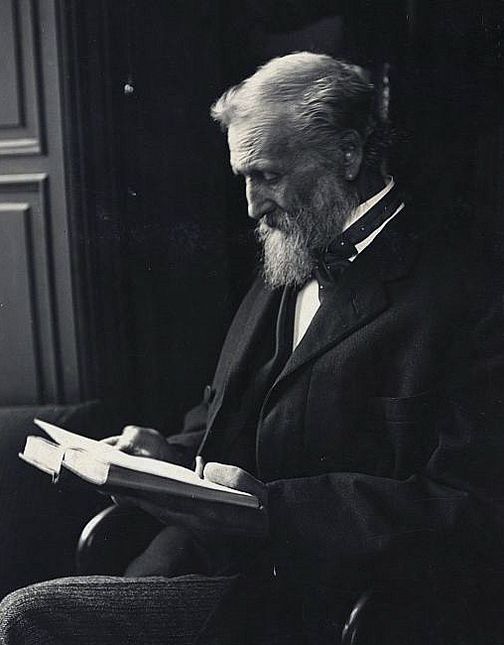

Summary
My First Summer in the Sierra is the journal John Muir kept from June to September 1869, a year after he reached California, when he signed on to help move a flock of about two thousand sheep from the San Joaquin plains into the high country around Yosemite. The sheep-owner, Mr. Delaney, agrees that Muir need do little herding; his real work is to study plants, rocks, animals and weather, with a hunter's St. Bernard named Carlo as his companion and Billy, a sullen shepherd, in charge of the flock. The entries begin on June 3 as the party climbs through the dusty foothills, and soon settle into a long camp on the North Fork of the Merced. There Muir sketches, botanizes, watches ants, lizards and Douglas squirrels, and describes the thunderclouds that build over the peaks almost every afternoon. When Delaney is late with supplies, the camp lives through a bread famine on mutton and tea, and Muir confesses how weak and sick a lover of wildness becomes without flour. In July the flock moves higher, to Tamarack Flat and the north rim of Yosemite Valley. Muir sketches from North Dome, edges out to the lip of Yosemite Falls on a ledge three inches wide, watches a brown bear in a flower meadow, and feels a sudden certainty that his old Wisconsin professor, J. D. Butler, has entered the valley below; the next day he finds him there. In August Delaney sends him over the range through Bloody Cañon to Mono Lake and its volcanic desert, and the flock grazes the Tuolumne Meadows beneath Mount Dana and Cathedral Peak. In September he climbs Cathedral Peak and the peaks at the head of the Tuolumne and Merced, then follows the sheep down to the lowlands. Throughout, Muir reads polished granite, moraines and meadow basins as the work of vanished glaciers, a theory he would soon defend in print, and he condemns the overgrazing sheep as hoofed locusts. Above all the book records a spiritual awakening: the mountains enter into him, every created thing seems hitched to everything else, and the range appears filled with God's beauty. Revised from his notebooks four decades later, the journal was published by Houghton Mifflin in 1911 and dedicated to the Sierra Club.
Virtues in this work
- Piety: Muir sees the hand of God in every rock, cloud and flower and writes of the mountains as filled with God's beauty.
- Fortitude: He endures the bread famine with humor and keeps climbing and studying through hunger and fatigue.
- Humility: He calls his sketches mere outlines and confesses his weakness without bread rather than posing as a hardy hero.
Plot or Argument
- Chapter I: Through the Foothills with a Flock of Sheep
June 1869: the bargain with Mr. Delaney, the loan of Carlo, and the slow, dusty climb with the flock from the plains past Pilot Peak Ridge into the first pines, where Muir writes that the mountains are now in him.
- Chapter II: In Camp on the North Fork of the Merced
Weeks of camp life: notes on lilies, ants, lizards and squirrels, daily thunder-showers over the peaks, and the first sharp judgments on the damage done by sheep.
- Chapter III: A Bread Famine
Delaney is overdue with supplies; the camp lives on mutton, sugar and tea, and Muir records nausea, weakness and the humbling lesson that even a mountaineer depends on a wheat-field and a mill.
- Chapter IV: To the High Mountains
The flock moves upward through the silver fir forests to Tamarack Flat and the Yosemite Creek basin, and Muir gains his first broad views of the high peaks.
- Chapter V: The Yosemite
Mid to late July on the north rim: sketching on North Dome, the dangerous descent to the brink of Yosemite Falls, a brown bear in a flower meadow, and, after a rainstorm, the praise of Cathedral Peak as a temple hewn from living rock.
- Chapter VI: Mount Hoffman and Lake Tenaya
A climb of Mount Hoffman and a ramble to Lake Tenaya; glacier-polished pavements, alpine gardens, and the meditation on the order of nature in which everything is hitched to everything else.
- Chapter VII: A Strange Experience
Muir feels that Professor J. D. Butler of Wisconsin is in Yosemite Valley, hurries down, and finds him there the next day, the one event of his life he calls supernatural.
- Chapter VIII: The Mono Trail
Early August: the flock is driven along the Mono Trail to the upper Tuolumne; notes on meadows, birds, bears, the Soda Springs and the habits of the shepherds and their dogs.
- Chapter IX: Bloody Cañon and Mono Lake
An excursion across the summit by the steep Bloody Cañon pass to Mono Lake, its volcanic cones and the desert beyond, and a band of Mono people met on the trail.
- Chapter X: The Tuolumne Camp
Late August and early September in the Tuolumne Meadows beneath Mount Dana; the climb of Cathedral Peak on September 7 and a long day among the peaks at the head of the Tuolumne and Merced rivers.
- Chapter XI: Back to the Lowlands
September frosts drive the flock back down the range; at the corral the sheep are counted and nearly all are accounted for, and Muir longs to return to the mountains.
Characters
- John Muir, author and journal-keeper
Thirty-one-year-old Scottish-American wanderer, hired to watch a shepherd, who spends the summer studying the Sierra.
- Mr. Delaney, sheep-owner
Tall Irish rancher, once educated for the priesthood, who encourages Muir's studies and takes him to Mono Lake.
- Billy, shepherd
Gruff, grumbling shepherd who cares little for scenery and complains when the bread runs out.
- Carlo, St. Bernard dog
A hunter's dog lent to Muir for the summer, faithful, intelligent and quick to scent bears.
- Professor J. D. Butler, Muir's former teacher
University of Wisconsin professor whom Muir senses is in Yosemite Valley and finds there.
Lessons
Everything is connected
Muir writes that when we try to pick out anything by itself, we find it hitched to everything else. Ants, lilies, clouds, glaciers and sheep all belong to one ordered whole, and he sees in that order the hand of God.
- What examples does Muir give of one part of nature depending on another?
- How does Muir connect the order of nature with God?
- What connections can you find in a garden, creek or park near your home?
Gratitude for daily bread
During the bread famine Muir, who claims to need little, finds he is weak and sick without flour. The episode is funny and honest, and it reminds readers that even the freest wanderer depends on farmers, millers and the gifts of ordinary food.
- How does the lack of bread change Muir's mood and work?
- Why do you think he includes this unheroic episode?
- What ordinary gifts do you depend on without noticing?
Seeing with attention
Muir sketches, measures cloud cover and records flowers day by day. He contrasts his own wonder with the shepherd who looks at the grandest scenery and sees nothing, and shows that attention is a habit that can be practiced.
- Why does Billy see so little of what Muir sees?
- What tools does Muir use to observe?
- Choose one place to observe for a week. What do you notice the second time that you missed the first?
Stewardship and its limits
Muir calls the sheep hoofed locusts because they strip the meadows. His complaint anticipates his later work for national parks, and it raises the question of how people should use land that God has given.
- What damage does Muir say the sheep cause?
- Is Muir fair to the shepherds and owners who make their living this way?
- How should people balance using the land and protecting it?
Context
In 1869 California was barely two decades past the Gold Rush, and the Sierra foothills were dotted with mining camps and ranches. Sheepmen drove huge flocks into the mountains each summer to graze the free public meadows, and Yosemite Valley had been granted to the State of California in 1864 as a protected park, though the high country around it was unprotected. Geologists such as Josiah Whitney held that Yosemite was formed by a sudden collapse; Muir, observing polished rock and moraines, came to believe that glaciers had carved it.
Composition
Muir kept a field journal and sketchbook during the summer of 1869. Some forty years later, at the urging of friends and publishers, he revised the notebooks into a book; parts appeared in The Atlantic Monthly early in 1911, and Houghton Mifflin published the volume that year with illustrations from photographs and Muir's own sketches. It was later reissued as volume II of the Sierra Edition of his writings, the edition used here.
Reception
Readers welcomed the book as the freshest and most personal of Muir's writings, and it quickly became one of the classics of American nature writing. Because it shows the young Muir falling in love with the Sierra, it is often read with The Story of My Boyhood and Youth as the second chapter of his life, and it remains a favorite with hikers, teachers and families visiting Yosemite.
Comparisons
- The Story of My Boyhood and Youth
Muir's memoir of his Scottish and Wisconsin youth ends as he leaves for the University of the Wilderness; this journal shows what he found there.
- Walden
Thoreau and Muir both turn a season in the woods into a book about attention and freedom; Thoreau lives by a pond near town, while Muir roams a vast range with a flock of sheep.
- The Natural History of Selborne
Gilbert White's letters model the patient, dated record of birds and plants that Muir's journal carries into the high mountains, though White writes as a parish clergyman and Muir as a rapt wanderer.
- The Voyage of the Beagle
Darwin's journal and Muir's both mix daily travel with geology and natural history; Darwin reasons cautiously about rocks and species, while Muir moves quickly from glacial evidence to praise.
- The Mountains of California
Muir's first book, written earlier but published later, turns the observations of this summer into finished essays on the Sierra's glaciers, forests and animals.
Quotes
Frequently cited
“We are now in the mountains and they are in us, kindling enthusiasm, making every nerve quiver, filling every pore and cell of us.”
Frequently cited
“Another glorious Sierra day in which one seems to be dissolved and absorbed and sent pulsing onward we know not where.”
Frequently cited
“When we try to pick out anything by itself, we find it hitched to everything else in the universe.”
“This quick, inevitable interest attaching to everything seems marvelous until the hand of God becomes visible; then it seems reasonable that what interests Him may well interest us.”
“No wonder the hills and groves were God’s first temples, and the more they are cut down and hewn into cathedrals and churches, the farther off and dimmer seems the Lord himself.”
“These blessed mountains are so compactly filled with God’s beauty, no petty personal hope or experience has room to be.”
“Of the two thousand and fifty that left the corral in the spring lean and weak, two thousand and twenty-five have returned fat and strong.”
For Students
A reading companion for classical Christian high school students. See the student guide.
Reading Guide
Watch for
- How Muir's descriptions of the same peaks and clouds change as he climbs higher through the summer.
- The contrast between Muir and Billy the shepherd in what they notice and value.
- Each place where Muir sees glaciers at work in polished rock, moraines and meadows.
- The bread famine in Chapter III and what it reveals about Muir himself.
- Muir's words about God, temples and beauty, and how they relate to Christian teaching about the Creator.
Key terms and names
- Sierra Nevada
- The long mountain range of eastern California, which Muir also called the Range of Light.
- Moraine
- A ridge or heap of boulders and gravel left behind by a glacier.
- Hoofed locusts
- Muir's scornful name for the vast flocks of sheep that stripped the mountain meadows.
- North Dome
- A rounded granite summit on the north rim of Yosemite Valley where Muir sketched.
- Bloody Cañon
- A steep pass on the east side of the Sierra leading down toward Mono Lake.
- Tuolumne Meadows
- Broad high meadows along the upper Tuolumne River where the flock spent late summer.
Seminar Questions
- Comprehension Why did Mr. Delaney hire Muir, and what was Muir actually free to do all summer?
- Comprehension What happened during the bread famine, and how did it end?
- Comprehension How did Muir find Professor Butler in Yosemite Valley?
- Interpretation What does Muir mean when he says the mountains are in us?
- Interpretation Why does Muir call sheep hoofed locusts, and is the name fair?
- Interpretation Muir says groves were God's first temples. What is he praising, and what might he be criticizing?
- Big Question Can the beauty of creation lead a person to know the Creator, and what are its limits as a teacher?
- Big Question What does it mean to care for land that we also need to use?
Faith Connections
- Psalm 121:1-2 (Scripture)
The psalmist lifts his eyes to the hills but says his help comes from the Lord who made heaven and earth. Muir lifts his eyes constantly; the psalm reminds readers that the hills point beyond themselves.
- Romans 1:20 (Scripture)
Paul teaches that God's eternal power and divine nature are clearly seen in the things he has made, which is close to Muir's sense of the hand of God visible in every rock and flower.
- Acts 17:24-28 (Scripture)
Paul tells the Athenians that God does not dwell in temples made with hands, yet is not far from each of us. Muir's line about groves as God's first temples echoes the first point; Christian readers will also recall that God chose to meet his people in church and sacrament.
- Augustine, Confessions X.6 (Great Conversation)
Augustine asks the earth, sea and sky whether they are his God, and they answer, We are not your God; seek above us. The passage is a helpful check on Muir's rapturous language about nature.
Logic and Rhetoric
Central argument: Close attention to the mountains shows that nothing in them is dead, dull or wasted; every part is joined to every other in one harmonious order. Such order reveals the hand of God. Therefore the mountains deserve wonder, study and protection rather than careless use.
Rhetorical device: personification. Muir gives streams voices and moods, calls the clouds and peaks friendly fellow mountaineers, and describes Nature as a poet and enthusiastic workingman.
Debate: Resolved: that Muir's summer of study did more good than a summer of herding would have done.
Memory Work
We are now in the mountains and they are in us, kindling enthusiasm, making every nerve quiver, filling every pore and cell of us.
When we try to pick out anything by itself, we find it hitched to everything else in the universe.
Writing Prompts
Essay: Muir begins the summer as a hired hand with a flock of sheep and ends it as a mountaineer and naturalist. Using three journal entries, explain how the summer changed him.
Comparison with Walden: Compare Muir's summer in the Sierra with Thoreau's two years at Walden Pond. What did each man go into the wild to find, and what did each bring back?
Medical Lens
The book offers a vivid lay account of diet and well-being in camp. In the bread famine of Chapter III Muir describes nausea, headache, weakness and difficulty concentrating on a diet of mutton, sugar and tea, and wishes they knew how to cook wild plants as the Indians did. Against this, he repeatedly describes mountain air, exercise and beauty as making the body feel transparent, tireless and whole, an early statement of the idea that wilderness restores body and mind. The final count of the flock records sheep poisoned by azalea, kalmia and alkali. These are personal impressions, not clinical observations.
- Chapter III
The bread famine: nausea, headache and languor on a mutton-only diet, and chewing ceanothus and monardella leaves for relief.
- Chapter I (June 6)
Muir writes that his flesh-and-bone tabernacle seems transparent and that he can hardly conceive of bodily needs in the mountains.
- Chapter XI (September 22)
The flock's losses for the summer, including sheep poisoned by azalea, kalmia and alkali.
Creative Prompts
- Classroom
Keep a dated nature journal for two weeks in Muir's manner, recording weather, cloud cover and one plant or animal each day, with at least three sketches.
- Essay
Muir says everything is hitched to everything else. Choose one chain of connections from the book, such as sheep, meadows and streams, and explain it in your own words.
- Dialogue
Write a campfire conversation between Muir and Billy the shepherd about what the mountains are for.
- Poetry
Write a short poem about a thunderstorm building over mountains, using at least three precise details from Muir's journal.
- Fiction
Retell the brown bear encounter in Chapter V from Carlo the St. Bernard's point of view.
Further Reading
- The Story of My Boyhood and Youth, John Muir
His earlier years in Scotland and Wisconsin.
- The Yosemite, John Muir
His 1912 guide to the valley and its trails.
- A Thousand-Mile Walk to the Gulf, John Muir
The walk of 1867 that led him to California.
- Son of the Wilderness: The Life of John Muir, Linnie Marsh Wolfe
- A Passion for Nature: The Life of John Muir, Donald Worster
Verification notes
Dates, names (Mr. Delaney, Billy, Carlo, Professor Butler), places (North Fork of the Merced, Tamarack Flat, North Dome, Lake Tenaya, Bloody Cañon, Mono Lake, Tuolumne Meadows, Cathedral Peak) and the final count of the flock were checked against the attached Gutenberg text of the 1917 Sierra Edition. The 1911 Houghton Mifflin publication and the dedication to the Sierra Club follow the text's title page and dedication. Quotes were checked against the attached text.
- The exact issues of The Atlantic Monthly (1911) in which parts of the journal first appeared.
- How heavily Muir revised the 1869 notebooks when preparing the book about 1910.