Work record
The Mountains of California
John MuirThe Mountains of California by John Muir (1894)The Mountains of California, John Muir's first book, gathers and revises essays he had written over two decades of wandering in the Sierra Nevada into a portrait of the whole range, from its glaciers and peaks down to its forests, birds and…1894 · 19th Century · Essays · English
Abstract
Background. After two decades of solitary rambles, often with only bread and tea in his pack, the Scottish-born naturalist assembled his magazine pieces into a single description of the range he loved.
Scope. The chapters move from high country to low: ice and snow, passes and lakes, then woodland, wildlife, weather, and finally the gold country and the flowery lowland plain.
Content. Highlights include the first known climb of a major peak, a ride in a treetop through a gale, a lively squirrel, a singing bird that walks under rushing streams, nimble bighorn, plume-like snow blown from summits, and fields of bloom that once fed countless bees.
Method. Muir combines field geology, botany and patient observation with lyrical, often personified description. He argues his glacial theory from polished rock, boulders and basins examined on foot across many seasons, and the volume is illustrated with maps and engravings.
Themes. The shaping power of ice and time, the beauty and fitness of living things, the courage of the climber, the Creator's handiwork, and the loss of wild land to careless use.
Significance. His debut volume made him the best-known interpreter of the Sierra, supplied several of the most anthologized chapters in American nature writing, and helped build public support for protecting California's mountains.
Key figures
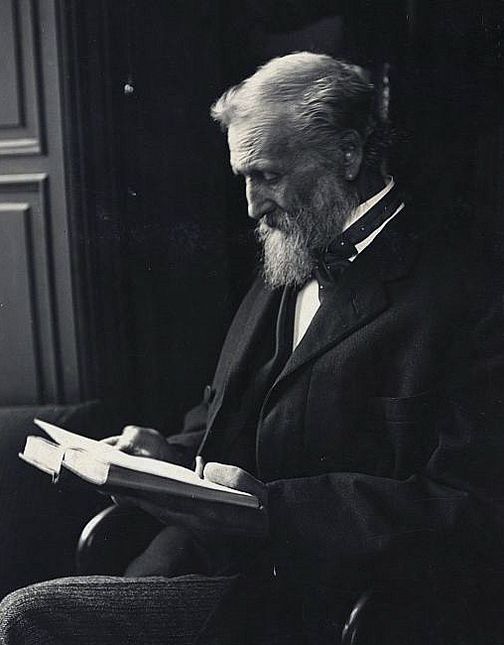
- John Muir: Narrator, mountaineer and student of glaciers

Summary
The Mountains of California, John Muir's first book, gathers and revises essays he had written over two decades of wandering in the Sierra Nevada into a portrait of the whole range, from its glaciers and peaks down to its forests, birds and flowering foothills. It opens with a view from the Pacheco Pass across the Central Valley, then carpeted with golden flowers, to the luminous wall of mountains that Muir says should be called not the Snowy Range but the Range of Light. The early chapters explain how the landscape was made. Muir describes the few small living glaciers he found in the high cirques, beginning with one on the Merced group in 1871, and argues that ancient ice sheets carved the cañons, polished the granite, scooped out the lake basins and left the moraines on which meadows and forests now grow. Chapters on snow, passes, glacier lakes and glacier meadows follow the water from its icy fountains downward. The fourth chapter, a near view of the High Sierra, tells of his solitary first ascent of Mount Ritter, where, clinging to a cliff and unable to move, he is seized by fear until a sudden clearness returns and carries him to the summit. The long chapter on the forests describes each of the great conifers in turn, the sugar pine, yellow pine, Douglas spruce, incense cedar, firs and the Big Tree, as distinct characters with their own forms and voices. The following chapters are among Muir's most famous: the Douglas squirrel, whom he calls the most interesting and influential of the California squirrels; a December wind-storm in the Yuba River country, which he rides out at the top of a swaying hundred-foot spruce; spring floods and summer thunderstorms; the water-ouzel, the little gray bird that sings beside every waterfall; and the wild sheep, whose agility on cliffs he contrasts with the timidity of tame flocks. The book closes in the gold-mining foothills around Murphy's Camp and in the bee-pastures of the Central Valley, where Muir mourns the vast flower beds already being lost to plows and grazing. Published by The Century Company in 1894, two years after Muir helped found the Sierra Club, the book combines scientific argument with praise of the Creator's handiwork and an implicit plea that the mountains be protected.
Virtues in this work
- Fortitude: Muir climbs Mount Ritter alone, masters his fear on the cliff, and rides out a gale at the top of a hundred-foot tree.
- Industry: He spends years tracing moraines, lake basins and glacier polish on foot to build the evidence for his theory.
- Piety: He describes the forests, creatures and storms of the range as the ordered and beautiful work of their Creator.
Plot or Argument
- Chapter I: The Sierra Nevada
A survey of the range from the Pacheco Pass: its length, its zones of foothills, forests and alpine summits, and the light that leads Muir to name it the Range of Light.
- Chapters II-III: The Glaciers and The Snow
The discovery of living glaciers in the high cirques in 1871, the evidence that ancient ice shaped the range, and the winter snow, including the snow-banners streaming from the peaks behind Yosemite.
- Chapter IV: A Near View of the High Sierra
Muir leaves a party of artists and climbs Mount Ritter alone, becomes trapped on a cliff, and is delivered by a sudden calm clearness that guides his hands and feet to the summit.
- Chapters V-VII: Passes, Glacier Lakes and Glacier Meadows
The high passes such as Bloody Cañon, the birth and slow filling of lakes in ice-scoured basins, and the silky meadows that take their place.
- Chapter VIII: The Forests
Portraits of the great conifers of the Sierra, from the nut pine and sugar pine to the Douglas spruce and the Sequoia, the king of conifers.
- Chapter IX: The Douglas Squirrel
The busy chickaree of the pine woods, his harvests of cones, his scolding cries and his part in planting the forest.
- Chapter X: A Wind-Storm in the Forests
In December 1874 Muir climbs a tall Douglas spruce on a Yuba River ridge and rides out a gale in its swaying top, reflecting that trees, too, are travelers.
- Chapters XI-XII: The River Floods and Sierra Thunder-Storms
The spring floods of the Sierra rivers and the summer storm-clouds that build over the peaks and break in thunder and hail.
- Chapter XIII: The Water-Ouzel
The dipper, a small gray bird that walks under rushing water and sings in every season beside the falls, which Muir calls the mountain streams' own darling.
- Chapter XIV: The Wild Sheep
The bighorn of the high peaks, its range and habits, and a contrast between the bold, graceful wild sheep and the dull domestic flocks.
- Chapters XV-XVI: In the Sierra Foot-Hills and The Bee-Pastures
The old mining town of Murphy's Camp and its geology, then the honey-bloom of the Central Valley and foothills, the wild and tame bees that feed on it, and its loss to plow and sheep.
Characters
- John Muir, author and narrator
Mountaineer, glacier student and botanist describing the range he has explored for twenty years.
Lessons
Reading the book of the landscape
Muir treats polished rock, moraines, lake basins and meadows as evidence that can be read. He shows students that careful observation over many years can overturn the accepted theory of experts.
- What evidence does Muir give that glaciers shaped the Sierra?
- Why does he spend so many years walking the same range?
- What landscape near you shows signs of how it was formed?
Courage and deliverance
On Mount Ritter Muir is trapped on a cliff and overwhelmed by fear, then suddenly finds himself calm and precise. He calls the power that guided him Instinct or a Guardian Angel and does not explain it away. The episode invites reflection on fear, providence and the limits of self-reliance.
- What mistakes led Muir into danger on Mount Ritter?
- How does he describe the moment when his fear lifts?
- How might a Christian reader interpret his words about a Guardian Angel?
Every creature has a character
Muir writes about the Douglas squirrel, the water-ouzel and the wild sheep as individuals with courage, cheer and skill. His portraits teach close attention and respect for small creatures as part of an ordered creation.
- What qualities does Muir admire in the water-ouzel?
- How does he contrast the wild sheep with tame sheep?
- Which animal near you could you describe as carefully as Muir describes the squirrel?
What is lost when land is used carelessly
The book ends with the vanishing flower beds of the Central Valley and laments the damage done by sheep and plows. Muir does not oppose farming, but he asks readers to notice what is being lost and to value it.
- What did the Central Valley look like when Muir first saw it?
- What changed it?
- How can communities make room for both farms and wild places?
Context
When Muir arrived in California in 1868, the official geological survey led by Josiah D. Whitney taught that Yosemite Valley had been formed when its floor dropped suddenly, and it doubted that glaciers had played a large part. Muir's articles of the 1870s argued instead that ice had carved the valley and the range. By the 1890s logging, mining and huge flocks of sheep were damaging the Sierra; Yosemite, Sequoia and General Grant National Parks were created in 1890, and Muir helped found the Sierra Club in 1892.
Composition
Most chapters began as magazine articles written between the mid-1870s and the early 1890s for Scribner's Monthly and its successor The Century, the Overland Monthly and other magazines. With encouragement from his editors, Muir revised and arranged them as a book, which The Century Company published in New York in 1894 with illustrations and maps.
Reception
Reviewers praised the book's vivid style and scientific authority, and it established Muir as the leading writer on the Sierra. Chapters such as A Wind-Storm in the Forests and The Water-Ouzel became anthology favorites, and the book is still read as a founding work of American nature writing and an early argument for wilderness protection.
Comparisons
- My First Summer in the Sierra
The 1869 journal records the summer when Muir first saw much of the country described here; this book gives his finished, essay-length conclusions.
- Our National Parks
Muir's later essays turn the description of the Sierra into a direct appeal to visit and protect the parks.
- Walden
Thoreau's chapters on the pond, the ice and the animals of Concord resemble Muir's portraits of lakes, snow and the Douglas squirrel, though Thoreau writes of a small familiar place and Muir of a vast range.
- The Natural History of Selborne
Like Gilbert White, Muir writes affectionate natural histories of individual birds and animals, but he sets them among glaciers and giant trees rather than an English parish.
- The Voyage of the Beagle
Darwin and Muir both read the history of the earth in rocks and landforms; Darwin was persuaded by Lyell's slow processes, and Muir argues for the shaping power of ancient ice.
Quotes
Frequently cited
“Then it seemed to me the Sierra should be called not the Nevada, or Snowy Range, but the Range of Light.”
Frequently cited
“We all travel the milky way together, trees and men; but it never occurred to me until this storm-day, while swinging in the wind, that trees are travelers, in the ordinary sense.”
Frequently cited
“He is the mountain streams’ own darling, the humming-bird of blooming waters, loving rocky ripple-slopes and sheets of foam as a bee loves flowers, as a lark loves sunshine and meadows.”
“But this terrible eclipse lasted only a moment, when life blazed forth again with preternatural clearness.”
“Being accustomed to climb trees in making botanical studies, I experienced no difficulty in reaching the top of this one, and never before did I enjoy so noble an exhilaration of motion.”
“The tame is timid; the wild is bold.”
“The Great Central Plain of California, during the months of March, April, and May, was one smooth, continuous bed of honey-bloom, so marvelously rich that, in walking from one end of it to the other, a distance of more than 400 miles, your foot would press about a hundred flowers at every step.”
For Students
A reading companion for classical Christian high school students. See the student guide.
Reading Guide
Watch for
- The name Range of Light in Chapter I and how Muir justifies it.
- Each piece of evidence for ancient glaciers in Chapters II, VI and VII.
- The moment of fear and deliverance on Mount Ritter in Chapter IV.
- How Muir gives individual character to trees, squirrels, birds and sheep.
- The note of loss in the last chapter on the bee-pastures.
Key terms and names
- Range of Light
- Muir's name for the Sierra Nevada, for the brightness of its granite, snow and sky.
- Cirque
- A steep-walled bowl at the head of a mountain valley, carved by a glacier.
- Moraine
- A ridge of rock debris pushed or dropped by a glacier.
- Water-ouzel
- The American dipper, a small gray songbird that feeds underwater in mountain streams.
- Douglas squirrel
- The chickaree, a small, noisy squirrel of the Sierra pine forests that harvests and buries cones.
- Bee-pastures
- Muir's term for the vast wildflower beds of the Central Valley and foothills that once fed wild and tame bees.
Seminar Questions
- Comprehension From what place did Muir first see the Sierra, and what did the Central Valley look like then?
- Comprehension Why did Muir climb a tree during the wind-storm, and what did he experience there?
- Comprehension What does the water-ouzel do that makes it unusual among birds?
- Interpretation Why does Muir describe trees and animals as if they were persons? What does the habit add, and what might it hide?
- Interpretation What does Muir mean when he says trees are travelers?
- Interpretation How does Muir account for his escape on Mount Ritter, and how would you account for it?
- Big Question Should a scientist also be a poet, and can wonder help or hinder the search for truth?
- Big Question What do we owe to the places that cannot speak for themselves?
Faith Connections
- Job 38-39 (Scripture)
God answers Job by pointing to snow, ice, storms, wild goats and the birds of the air. Muir's chapters on snow, glaciers, storms and wild sheep read like a long meditation on the same questions.
- Psalm 104:16-18 (Scripture)
The trees of the Lord are full of sap; the high hills are a refuge for the wild goats. The psalm praises the same order of forests and mountain creatures that Muir describes.
- Psalm 91:11-12 (Scripture)
He shall give his angels charge over thee, lest thou dash thy foot against a stone. Muir's guardian-angel language on Mount Ritter invites comparison, along with the warning against tempting God by needless risk (Matthew 4:6-7).
Logic and Rhetoric
Central argument: The landscape of the Sierra, from its peaks to its meadows, is the ordered work of ice, water and time. Its creatures are fitted to it with wonderful skill. Therefore it is worthy of study, wonder and protection, and its careless destruction is a real loss.
Rhetorical device: personification. Muir calls the water-ouzel the mountain streams' own darling and gives the Douglas squirrel a fiery temper and the trees voices and journeys.
Debate: Resolved: that Muir was right to climb the tree in the wind-storm.
Memory Work
Then it seemed to me the Sierra should be called not the Nevada, or Snowy Range, but the Range of Light.
He is the mountain streams’ own darling, the humming-bird of blooming waters, loving rocky ripple-slopes and sheets of foam as a bee loves flowers, as a lark loves sunshine and meadows.
Writing Prompts
Essay: Choose one creature from the book, the Douglas squirrel, the water-ouzel or the wild sheep, and explain how Muir shows that it is suited to its place in creation.
Comparison with Walden: Compare Muir's wind-storm chapter with Thoreau's description of the ice and the thaw at Walden Pond. How does each writer turn a natural event into a lesson?
Medical Lens
The Mount Ritter chapter is a striking first-person account of acute fear in danger and its sudden resolution. Muir describes becoming nerve-shaken, as if his mind were filled with stifling smoke, and then a heightened state in which every flaw in the rock seems magnified and his limbs move without conscious direction. He attributes it to instinct or a guardian angel; modern readers may compare it to accounts of the stress response in climbers. Elsewhere the book treats storm, exercise and mountain air as tonic to body and spirit. These are personal impressions rather than medical claims.
- Chapter IV
Trapped on a cliff on Mount Ritter, Muir is overcome by fear and then by an unnatural clearness and steadiness that carries him to the summit.
- Chapter X
Muir describes the exhilaration of riding a treetop in a gale and the tonic fragrance of the wind.
Creative Prompts
- Classroom
Draw a labeled cross-section of a glacier carving a valley, showing a cirque, moraine, lake basin and meadow, using Muir's descriptions in Chapters II, VI and VII.
- Essay
Muir calls the Douglas squirrel the most interesting and influential of the California squirrels. Using Chapter IX, explain what he means and whether you agree.
- Poetry
Write a poem about the water-ouzel, using at least four details from Muir's chapter about where it lives and how it sings.
- Fiction
Write the wind-storm of Chapter X from the point of view of the Douglas spruce that carries Muir.
- Dialogue
Stage a debate between Muir and a geologist who believes Yosemite Valley was formed by the sinking of its floor.
Further Reading
- My First Summer in the Sierra, John Muir
His journal of 1869, the first season in the high Sierra.
- The Yosemite, John Muir
- John Muir: Nature Writings, John Muir, ed. William Cronon
Library of America collection that includes this book.
- Son of the Wilderness: The Life of John Muir, Linnie Marsh Wolfe
- A Passion for Nature: The Life of John Muir, Donald Worster
Verification notes
Chapter titles, the Pacheco Pass view, the 1871 discovery of a living glacier on the Merced group, the Mount Ritter climb, the December 1874 wind-storm on a Yuba River tributary and the Murphy's Camp and bee-pasture chapters were checked against the attached Gutenberg text. Publication by The Century Company in 1894, the magazine origins of the chapters follow standard Muir bibliographies and biographies. Quotes were checked against the attached text.
- The date of the Mount Ritter ascent, which biographers give as October 1872; the chapter itself does not state the year.
- Which edition or printing of the Century Company text the Gutenberg transcription follows.