Work record
The Princess and Curdie
1883 (serialized 1882) · 19th Century · Novel · English
Abstract
Background. A sequel to MacDonald's Princess and the Goblin of 1872, this story takes its miner hero away from the goblin caves to a royal capital in moral decay. MacDonald, a Scottish minister and fantasist, wrote it in his maturity.
Plot. Shamed after wounding a white dove, Curdie is healed in conscience by the ancient lady of the tower and receives, through a fire of roses, hands able to sense whether people are sinking into beasts. With the beast Lina and forty-nine misshapen followers he travels to Gwyntystorm, finds the king drugged by Dr Kelman and betrayed by his officers, cleanses the palace, and helps defeat the invading army of Borsagrass.
Structure. Thirty-five short chapters move from mountain to city, from repentance to judgement, and close with a coda in which a later, gold-hungry ruler undermines the rock and the capital collapses.
Themes. Spiritual growth or decay, discernment, hospitality toward strangers, the corruption of courts and clergy, healing through purifying pain, and providence working in humble forms.
Significance. Sterner than its predecessor, the book is prized by readers of Lewis and other Christian fantasists for its picture of holiness that is both fearsome and tender. Its unhappy final page, unusual in a children's book, keeps it from ever being merely a comfortable fairy tale.
Main characters
- Curdie: Miner's son, nearly thirteen, sent to rescue the king
- The old princess: Irene's ancient great-great-grandmother, appearing in many forms
- Princess Irene: The king's young daughter, nursing her father in the palace
- The king: Good ruler wasting under despondency and a doctor's drugged wine
- Peter and Joan: Curdie's parents, who trust the old princess
- Lina: Monstrous creature with a child's hand, Curdie's companion
- Derba and Barbara: Poor grandmother and grandchild who shelter the strangers
- Dr Kelman: The king's poisoning physician
- The lord chamberlain: Leader of the treacherous court

Summary
The Princess and Curdie is George MacDonald's sequel to The Princess and the Goblin, set about a year after the goblins were defeated. Curdie, the miner's son, now nearly thirteen, has grown dull and doubtful; he half believes that Princess Irene's great-great-grandmother was only a child's dream. One evening he shoots a white pigeon with an arrow for the pleasure of his skill, sees the bird's eyes, and is overwhelmed with shame. He carries it to the tower of the king's house, where the old princess, first a withered spinner and then a tall, grand lady, mends the bird and leads him to see that his real fault was never trying to be better. In the mine she later appears to Curdie and his father Peter in green light, and gives Peter an emerald that will show whether his son is safe. Then she asks Curdie to thrust his hands into a fire of burning roses. The pain takes away his rough skin and gives him a gift: by touching a person's hand he can feel whether that person is turning into a beast, and which beast. She sends him to the royal city of Gwyntystorm with Lina, a hideous, loyal creature whose paw he finds is a child's hand, and on the way forty-nine other strange creatures join him. Gwyntystorm is proud, greedy and inhospitable. Its people stone Curdie, its butchers' dogs attack Lina, and only the poor old woman Derba and her grandchild Barbara take him in. Imprisoned, he escapes through the cellars into the palace and finds the king lying weak and confused, guarded by Irene, while the doctor, Dr Kelman, gives him drugged wine each night and the lord chamberlain and other officers plot to take his crown. Curdie feeds the king on honest bread and wine, Lina breaks the doctor's leg, and the creatures drive out the thieving servants and the treacherous courtiers. A neighbouring kingdom, Borsagrass, invades at the traitors' invitation. In a night of rose-fire the old princess heals the king, and next day the king, his old colonel, a page, Curdie, the Uglies and a cloud of white pigeons rout the invaders, with Peter arriving in time to strike down their general. The king's housemaid is revealed as the old princess herself. Curdie and Irene later marry and reign well, but they have no children, and a greedy king chosen after them mines away the pillars under the city until Gwyntystorm falls into the river and is forgotten. MacDonald published the book in 1883 after an earlier magazine serialization.
Virtues in this work
- Humility: Curdie confesses to the old princess that he has been doing wrong for many days, not just in shooting her pigeon.
- Fortitude: He holds his hands in the burning roses until the pain passes, trusting her word.
- Charity: Derba takes in Curdie and Lina when every other door in Gwyntystorm is shut.
- Justice: Curdie exposes Dr Kelman and the plotting courtiers and helps the king judge them in the market place.
- Faith: Curdie steps into the princess's room when he sees no floor, because feeling for it first would be to distrust her.
Plot or Argument
- Chapters 1-4: The pigeon
Curdie, growing dull and unbelieving, shoots a white pigeon; he carries it to the tower, where the old princess at her wheel heals it and shows him his fault, and his parents tell him to do as she says.
- Chapters 5-7: The emerald
The miners mock tales of Old Mother Wotherwop; Peter and Curdie follow a green light into the mountain, where the old princess teaches that shapes are only dresses and gives Peter an emerald as a sign.
- Chapters 8-12: The rose-fire and the mission
Curdie plunges his hands into burning roses and gains the power to feel the beast in a man's hand; sent to the king, he meets Lina, whose paw is a child's hand, and forty-nine other creatures on the heath.
- Chapters 13-16: Gwyntystorm
The baker, the barber, the butchers' dogs and the townspeople meet Curdie with spite; Derba and Barbara shelter him; he is jailed and freed by Lina's digging.
- Chapters 17-23: The poisoned king
Through the wine cellar and kitchen Curdie reaches the king's chamber, meets Irene again, replaces the drugged wine with good bread and wine, and exposes Dr Kelman, whose leg Lina crushes.
- Chapters 24-28: The cleansing of the palace
The Uglies drive out the servants and bind the guilty officers; the first priest preaches that self-interest is the first duty of man and is carried from his pulpit by the legserpent.
- Chapters 29-31: Barbara, Peter and the sacrifice
Little Barbara drives away the king's nightmares; the emerald fades and Peter sets out; the old princess lays the king in a fire of roses and heals him.
- Chapters 32-35: Battle, judgement and the end
The small royal army and the pigeons rout Borsagrass; the traitors are carried off by the beasts; the housemaid is revealed as the old princess; Curdie and Irene reign, and generations later the city falls through greed.
Characters
- Curdie, protagonist
Peter's son, a young miner whose repentance over a pigeon begins his mission to save the king.
- The old princess (Queen Irene), guide
Irene's great-great-grandmother, who appears as a spinner, a lady in green, an old countrywoman and a housemaid.
- Princess Irene, princess
The king's daughter, now nearly ten, who watches over her sick father day and night.
- The king, King Papa
A good king made weak and confused by despondency and his doctor's drugged wine.
- Peter, Curdie's father
A thoughtful miner who trusts the old princess and comes to his son's rescue in the battle.
- Joan, Curdie's mother
A wise and faithful woman who helps Curdie see what to make of his strange experience.
- Lina, companion
A monstrous, devoted creature whose paw feels like a child's hand.
- Derba and Barbara, hosts
A poor old woman called a witch by her neighbours and her small granddaughter, who shelter Curdie.
- Dr Kelman, villain
The king's physician, who gives him a slow poison while professing tender care.
- The lord chamberlain, villain
Chief of the plotting courtiers, whose hand is the claw of a bird of prey.
- Sir Bronzebeard, colonel of the guard
The loyal old colonel who rides beside the king into battle.
Lessons
Not trying to be better is itself a wrong
Curdie thinks he has done nothing very bad all day, but the old princess helps him see that he has been drifting, ignoring his parents and grumbling at his work. MacDonald teaches that the soul either grows or decays, and that repentance begins when a child sees plainly what he has done.
- Why does the pigeon's look make Curdie so ashamed?
- What does Curdie say his real wrong was?
- Why is the old princess glad that he shot her bird?
Hands that tell the truth
After the rose-fire Curdie can feel in a hand whether a person is becoming a beast. The gift shows that what people do slowly makes them what they are. The princess warns him not to judge quickly, since two people may stand in the same place while one climbs and the other falls.
- What does Curdie feel when he takes Dr Kelman's hand?
- Why will the gift be taken away if he uses it for his own ends?
- How can two people look alike and still be going in opposite directions?
Hospitality and its opposite
Gwyntystorm keeps its gates open but its houses and hearts shut. Only Derba, called a witch because she lives quietly and honestly, welcomes the stranger. The book measures a city by how it treats newcomers, the poor and children.
- How do the baker, the barber and the innkeeper treat Curdie?
- Why do the townspeople call Derba a witch?
- What law does the king post in the market place about strangers?
Greed undermines a city
The palace servants steal, the courtiers plot, the preacher teaches that every one should take care of number one, and at last a greedy king mines away the pillars that hold up the city. MacDonald shows that a people can be saved for a time by good rulers and still choose ruin.
- What is the first priest's sermon about, and why is it false?
- Why do you think MacDonald ends with the fall of Gwyntystorm?
Context
MacDonald, a Scottish minister turned writer, wrote fairy tales for children that carry his Christian vision of growth, repentance and the hidden presence of God. The Princess and Curdie continues the story of The Princess and the Goblin (1872) but moves from the mountain and its goblins to a corrupt royal city. Its satire of a self-satisfied town, a self-serving clergy and grasping officials makes it darker than its predecessor.
Composition
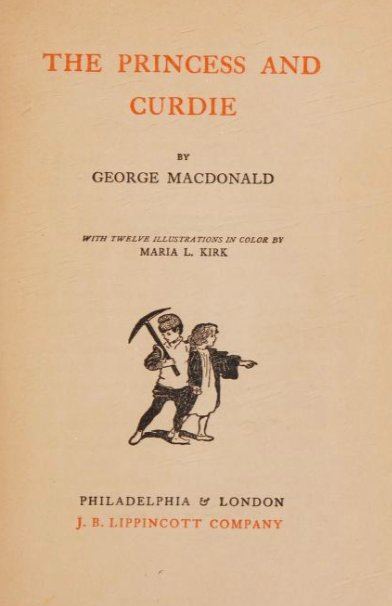
The story appeared first in a magazine and was published as a book in 1883, with illustrations by James Allen, by Chatto & Windus in London; a J. B. Lippincott edition appeared in the United States the same year.
Reception
The book has always been read in the shadow of The Princess and the Goblin and is often found sterner and stranger. Readers in the Christian tradition have valued its picture of the old princess as a figure of divine wisdom and its rose-fire as an image of purifying grace. C. S. Lewis acknowledged MacDonald as a decisive influence on his own imagination and faith.
Comparisons
- the-princess-and-the-goblin
The first book ends with the goblins defeated and Curdie a hero; the sequel begins with Curdie grown dull and doubting, so his real adventure starts with his own repentance.
- the-wise-woman
MacDonald's other tale of a mysterious wise woman who appears in many shapes and leads selfish children through painful tests toward goodness.
- the-pilgrims-progress
Both journeys move a young traveller through a proud and hostile city toward a royal court, with trust and obedience as the way.
- the-faerie-queene
Spenser's Redcrosse Knight and Curdie both fight evil in a corrupt house with the help of a heavenly lady, and both must learn to tell true from false.
- the-lion-the-witch-and-the-wardrobe
Lewis, who called MacDonald his master, gives Aslan some of the old princess's qualities: a holy presence who is both terrible and kind, and who heals through suffering.
- on-fairy-stories
Tolkien's essay on fantasy as recovery and consolation helps explain how MacDonald uses a fairy tale to say serious things about sin and grace.
Quotes
“the road to the next duty is the only straight one”
“There is this difference between the growth of some human beings and that of others: in the one case it is a continuous dying, in the other a continuous resurrection.”
“The child is not meant to die, but to be forever fresh born.”
“Remember, then, that whoever does not mean good is always in danger of harm.”
“Do better, and grow better, and be better.”
“Shapes are only dresses, Curdie, and dresses are only names.”
“It is greed and laziness and selfishness, not hunger or weariness or cold, that take the dignity out of a man, and make him look mean.”
“The nation was victorious, but the people were conquered.”
For Students
A reading companion for classical Christian high school students. See the student guide.
Reading Guide
Watch for
- Curdie's shot at the white pigeon in Chapter 2 and how the bird's eyes change him.
- The many shapes of the old princess: spinner, lady in green, old woman in a red cloak, housemaid.
- The fire of roses in Chapter 8 and what it does to Curdie's hands.
- How each person in Gwyntystorm treats Curdie and Lina when they arrive.
- The last page, when the city falls, and how it differs from a usual fairy-tale ending.
Key terms and names
- Gwyntystorm
- The king's proud royal city, built on a rock above a river, where hospitality has died out.
- Rose-fire
- The old princess's fire of burning roses that hurts terribly but heals; it gives Curdie his gift and later restores the king.
- Lina
- A huge, ugly creature with a child's hand, who becomes Curdie's faithful companion.
- The Uglies
- The forty-nine strange beasts, such as the legserpent, that follow Lina and help clean out the palace.
- Mattock
- A miner's digging tool like a pickaxe, which Curdie carries everywhere and uses in battle.
- Emerald
- The green stone the old princess gives Peter; its colour fades when Curdie is in danger.
Seminar Questions
- Comprehension What does Curdie do to the white pigeon, and what happens when he takes it to the tower?
- Comprehension What gift do Curdie's hands receive from the fire of roses?
- Comprehension Who is making the king sick, and how does Curdie find out?
- Interpretation Why does the old princess take so many different shapes, and why won't she give Curdie a sign to know her by?
- Interpretation Lina looks like a monster but has a child's hand, while Dr Kelman looks like a kind gentleman. What is MacDonald telling us?
- Interpretation Why does the king get better when Barbara sleeps in his arms?
- Big Question Can a whole city become bad, and what does it take to make it good again?
Faith Connections
- Malachi 3:2-3 (Scripture)
The Lord is like a refiner's fire that purifies silver. Curdie, a silver miner, and the king are both made clean by a fire that hurts but heals.
- Matthew 7:16-20 (Scripture)
By their fruits ye shall know them. Curdie's gift lets him know people by what their hands have done, not by how they look.
- Hebrews 13:2 (Scripture)
The letter urges hospitality, since some have entertained angels unawares. Derba welcomes Curdie and Lina when the whole city shuts its doors, and the housemaid who serves the king turns out to be the old princess.
- C. S. Lewis, preface to George MacDonald: An Anthology (1946) (Great Conversation)
Lewis wrote that he regarded MacDonald as his master and that reading him baptized his imagination; the holy and fearsome old princess shows why.
Logic and Rhetoric
Central argument: What people do every day makes them more human or more beastly. A good king cannot save a people who love only themselves. Only trust, obedience and a willingness to be purified make a person or a city truly good. Therefore Curdie, who repents and obeys, is fit to rule, and Gwyntystorm, which returns to greed, falls.
Rhetorical device: antithesis. In Chapter 2 the narrator sets two kinds of growth against each other, a continuous dying and a continuous resurrection (quote 1).
Debate: Resolved: that Curdie's gift of feeling a person's true nature would do more good than harm in our world.
Memory Work
Do better, and grow better, and be better.
the road to the next duty is the only straight one
Writing Prompts
Essay: Explain how Curdie changes from the boy who shoots the pigeon to the young man the king calls my own boy, using three scenes.
Comparison with The Princess and the Goblin: Compare Curdie in the two books. In which is he the braver hero, and in which does he learn more?
Medical Lens
The centre of the book is a doctor who poisons his patient. The king has been ill for a year; his daughter believes the soft-spoken Dr Kelman gives him only wine, but the doctor fills the glass from a phial, rouses the sleeping king roughly, and is twice seen with something bright, once a lancet, that he means to run into the king's arm. The king himself describes the inner side of the illness: after his queen's death he lost heart over the wickedness of his people, could not sleep, had terrible dreams, wandered in speech, and doubted everyone, while also suspecting rightly that his physician gave him poison. MacDonald's narrator calls despondency the main cause of the illness and the drugs a cause of lingering night terrors. Recovery comes by plain food, clean air, an honest nurse, a child who comforts him at night, and finally the old princess's fire. The first priest's fall into lunacy, whose madness jabbered sense, is a satirical touch. The modern reader may think of chronic sedation, depression or delirium, but these are readings of a fairy tale, not diagnoses.
- Chapter 19, The King's Chamber
Irene describes her father's nightly wandering and the doctor's medicine that is not really medicine but wine; Dr Kelman rouses the king and appears to run something bright into his arm.
- Chapter 23, Dr Kelman
The king tells of his despondency, sleeplessness, dreams and suspicion; the doctor fills the glass from a phial and takes out a lancet before Lina seizes him.
- Chapter 28, The Preacher
The first priest, carried off by the legserpent, is found a lunatic whose madness, the narrator says, jabbered sense.
- Chapter 29, Barbara
Evil dreams left by the doctor's medicines wake the king in terror, and only the sleeping child Barbara laid in his arms drives them away.
Listen to the book
Public-domain audiobook from LibriVox, read by Hannah Mary. Recording: Princess and Curdie (Version 2) on LibriVox (Internet Archive).
LibriVox recordings are volunteer readings released into the public domain. The reading may follow a different edition from the text in this library.
Creative Prompts
- Classroom
Make a chart of the people Curdie touches in Gwyntystorm (the baker, Dr Kelman, the lord chamberlain, Derba, the housemaid) and record what each hand feels like and what it shows.
- Fiction
Write the story of the white pigeon's flight from the tower to the battle, told by the pigeon.
- Essay
Why does MacDonald end the book with the fall of Gwyntystorm instead of with Curdie and Irene's happy reign?
- Dialogue
Write a conversation between Curdie and Lina, after the battle, about what she was before she became a beast.
Further Reading
- The Princess and the Goblin, George MacDonald
The first Curdie book.
- At the Back of the North Wind, George MacDonald
- George MacDonald: An Anthology, C. S. Lewis (ed.)
Lewis's preface explains MacDonald's influence on him.
- George MacDonald and His Wife, Greville MacDonald
Verification notes
Plot details, names and chapter titles follow the attached Project Gutenberg text (#709). The 1883 Chatto & Windus first edition with James Allen's illustrations was checked against a rare-book dealer's description (jonkers.co.uk), and the Lippincott US edition of 1883 against a dealer listing (worksofmacdonald.com). The Victorian fiction database at victorianresearch.org lists a serialization in Good Things for the Young in 1877, which conflicts with the manifest's 1882; the record therefore does not name a magazine or serial date. Medical readings of the king's illness are interpretive. All quotes were found in the attached text.
- Confirm the date and magazine of the first serialization (1877 in Good Things for the Young per the At the Circulating Library database, or 1882 per the manifest).
- Confirm whether the first edition was issued by Chatto & Windus (dealer description) or Strahan & Co (as some reference sources state).