Work record
Our National Parks
John MuirOur National Parks by John Muir (1901)Our National Parks is John Muir's invitation to Americans to visit, love and protect the wild parks and forest reservations of the West.1901 · Early 20th Century · Essays · English
Abstract
Background. At the height of the national debate over the new federal forest reserves, the Sierra Club's first president wrote a series of magazine sketches meant to turn readers into visitors and visitors into defenders of public land.
Scope. One essay covers the Rocky Mountain wonderland of geysers, seven explore Muir's own California park in detail, one treats the groves of giant trees farther south, and a closing essay surveys woodland across the continent.
Content. Readers meet boiling springs and waterfalls, conifers and flowering meadows, bears, deer, snakes and songbirds, a cranky pack animal on a journey through ancient groves, and a history of logging, burning and grazing.
Method. Muir writes as a seasoned guide, mingling practical advice, close natural history, humor and personal memory with biblical cadence, before ending in direct political argument for federal protection. Footnotes in the later printing bring the figures up to date.
Themes. Wilderness as a need of body and soul, unhurried travel, kinship with creatures, God as planter of the woods, and public stewardship against private waste.
Significance. Appearing as Theodore Roosevelt took office, the collection helped shape American opinion in a decade of rapid growth for parks and national forests, and it remains a founding text of the conservation movement.
Key figures
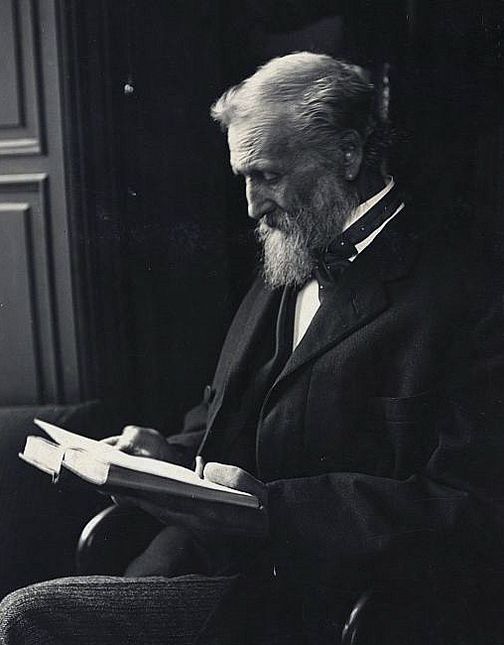
- John Muir: Narrator, mountaineer and advocate for the parks

Summary
Our National Parks is John Muir's invitation to Americans to visit, love and protect the wild parks and forest reservations of the West. In a short preface he explains that the ten sketches, first written for The Atlantic Monthly, aim to show the beauty, grandeur and usefulness of the mountain forests so that people will come, take them into their hearts, and see to their preservation. The first chapter is a manifesto. Muir rejoices that tired, nerve-shaken, over-civilized city people are learning that going to the mountains is going home and that wildness is a necessity. He surveys the four national parks then existing, Yellowstone, Yosemite, General Grant and Sequoia, and the forest reservations, and warns that their margins are already being wasted by axe, fire, mining and the hoofed locusts of the sheep flocks. The second chapter guides the visitor through Yellowstone: its volcanic plateau, geysers, hot springs, the Grand Cañon of the Yellowstone, its forests, flowers and animals. Muir urges travelers not to rush through in a few days but to walk away quietly, climb the mountains and get their good tidings. Seven chapters then turn to his own Sierra. Muir describes the Yosemite National Park as a whole, then its conifer forests, its wild gardens of lilies and meadow flowers, its animals from bears and deer to wood rats and rattlesnakes, its birds from the water-ouzel to the noisy Clarke crow of the high peaks, and its fountains and streams from the high snowfields down through the cañons. In the ninth chapter he follows the belt of Big Trees through the Sequoia and General Grant parks, traveling with a small pack-mule named Brownie, counting growth rings in fallen giants and arguing that the sequoia is not dying out but needs protection from lumbermen and sheepmen. The last chapter, on the American forests, is a history and a sermon. Muir describes the continent's forests as the best God ever planted, recounts their destruction by settlers, lumber companies and fire, contrasts American waste with European forestry, and calls on the federal government to protect what remains. The essays appeared in book form in 1901; the new and enlarged edition of 1909, used here, adds an appendix listing the national parks, monuments and forests of the day.
Virtues in this work
- Prudence: Muir urges travelers to take time, walk quietly and learn a place well instead of rushing through on hurried coach tours.
- Justice: He argues that the forests belong to the whole people and to future generations and must be defended against private waste.
- Piety: He describes the American forests as the best God ever planted and the trees as kept by God through the centuries.
- Charity: Ashamed of killing a rattlesnake in his youth, he resolves to be as fair and charitable as the snakes themselves.
Plot or Argument
- Preface
Muir states his purpose: to show the beauty and usefulness of the wild parks and reservations so that people will come to love them and secure their preservation.
- Chapter I: The Wild Parks and Forest Reservations of the West
Wildness is a necessity for over-civilized people; a survey of the four national parks and the forest reservations, and the threats to them from axe, fire and sheep.
- Chapter II: The Yellowstone National Park
A guide to Yellowstone's volcanic plateau, geysers, hot springs, cañon, lakes, forests and wildlife, with advice to travel slowly and on foot.
- Chapter III: The Yosemite National Park
Why Muir loves the Sierra best; the creation of the park, the glacial making of Yosemite Valley and the high country around it.
- Chapters IV-V: Forests and Wild Gardens of the Yosemite Park
Portraits of the pines, firs and sequoias, and of the lilies, azaleas, meadow flowers and alpine plants of the park.
- Chapters VI-VII: Animals and Birds of the Yosemite
Bears, deer, squirrels, wood rats and rattlesnakes, including Muir's regret at killing snakes in his youth; then the water-ouzel, the Clarke crow, the dun-headed sparrow of the snowfields and other birds.
- Chapter VIII: The Fountains and Streams of the Yosemite National Park
The streams of the Sierra traced from their snowy fountains and glaciers through meadows, cascades and cañons to the lowlands.
- Chapter IX: The Sequoia and General Grant National Parks
The Big Tree as the greatest of living things; Muir's journey with the mule Brownie along the sequoia belt, his ring counts, and his case against the claim that the species is dying out.
- Chapter X: The American Forests
The forests as God's best planting; their waste by settlers, lumbermen and fire; European examples; and the plea that only the federal government can save the trees.
- Appendix (1909)
Tables and statutes listing the national parks, national monuments and national forests of the United States as of 1909.
Characters
- John Muir, author and guide
Veteran mountaineer who writes as an experienced guide and an advocate for the parks.
- Brownie, pack-mule
Small, tough mule lent to Muir for his journey through the sequoia belt.
Lessons
Wildness as a necessity
Muir argues that people worn out by over-industry and luxury need the mountains for health of body and spirit. He calls going to the mountains going home. Christian readers may weigh this claim against the rest God promises in Christ, while still valuing the refreshment of creation.
- What kinds of people does Muir say are discovering the mountains?
- What do the mountains give them, according to Muir?
- How does the refreshment of nature differ from the rest offered in Matthew 11:28?
Slow seeing
Muir warns that visitors who rush through Yellowstone in a few days come away with only a blur. Real knowledge of a place takes time, walking and quiet. The advice applies to reading great books as much as to visiting parks.
- Why does Muir criticize the three-to-five-day tours?
- What does he recommend instead?
- What in your life would you understand better if you slowed down?
Stewardship and the common good
Muir says God has cared for the ancient trees for thousands of years but cannot save them from fools, and only the national government can. He makes a moral case that some goods belong to the whole people and to future generations, not only to those who can profit today.
- Who does Muir blame for the destruction of the forests?
- Why does he think the federal government must act?
- What responsibilities do we have to people who will live a hundred years from now?
Repentance for needless killing
In the chapter on animals Muir tells how he once killed rattlesnakes and felt degraded, farther from heaven, and resolved to be as fair to them as they were to him. The episode shows a man examining his conscience about cruelty.
- Why does Muir feel degraded after killing the snake?
- Is it ever right to kill a dangerous animal?
- How should a Christian think about cruelty to creatures?
Context
Yellowstone became the first national park in 1872, and Yosemite, Sequoia and General Grant National Parks followed in 1890, partly through Muir's writing. The Forest Reserve Act of 1891 let presidents set aside forest reserves, and by 1897 tens of millions of acres had been withdrawn amid fierce opposition from lumber, mining and grazing interests. Muir helped found the Sierra Club in 1892 and wrote these essays to build public support for the parks and reserves.
Composition
The ten chapters were written between 1897 and 1901, mostly for The Atlantic Monthly, whose editors encouraged Muir to write a series on the western parks. Houghton Mifflin published them as a book in 1901, with a preface dated Martinez, California, September 1901. A new and enlarged edition of 1909, the one used here, added notes updating the number of parks and an appendix of park, monument and forest statistics.
Reception
The book was widely read and is often credited with shaping public opinion during Theodore Roosevelt's presidency, when the number of national forests, parks and monuments grew rapidly; Roosevelt camped with Muir in Yosemite in 1903. It remains one of the classic texts of the American conservation movement.
Comparisons
- Theodore Roosevelt: An Autobiography
Roosevelt, who camped with Muir in 1903, gives the statesman's account of the conservation policies that Muir urged as a writer.
- Walden
Thoreau's call to simplify life and Muir's call to go to the mountains both criticize over-busy modern living; Thoreau asks each person to change his own life, Muir asks the nation to protect public land.
- The Mountains of California
Muir's earlier book describes the same Sierra forests and creatures for their own sake; this one turns description into a campaign.
- My First Summer in the Sierra
The 1869 journal shows the young Muir first seeing the damage of sheep in the Sierra meadows that this book asks the government to stop.
- The Natural History of Selborne
Gilbert White's parish natural history is a gentle English ancestor of Muir's chapters on the birds and animals of the Yosemite.
Quotes
Frequently cited
“Thousands of tired, nerve-shaken, over-civilized people are beginning to find out that going to the mountains is going home; that wildness is a necessity; and that mountain parks and reservations are useful not only as fountains of timber and irrigating rivers, but as fountains of life.”
Frequently cited
“Climb the mountains and get their good tidings. Nature’s peace will flow into you as sunshine flows into trees. The winds will blow their own freshness into you, and the storms their energy, while cares will drop off like autumn leaves.”
Frequently cited
“Through all the wonderful, eventful centuries since Christ’s time—and long before that—God has cared for these trees, saved them from drought, disease, avalanches, and a thousand straining, leveling tempests and floods; but he cannot save them from fools,—only Uncle Sam can do that.”
“Nothing can be done well at a speed of forty miles a day.”
“I felt degraded by the killing business, farther from heaven, and I made up my mind to try to be at least as fair and charitable as the snakes themselves”
“The forests of America, however slighted by man, must have been a great delight to God; for they were the best he ever planted.”
“Any fool can destroy trees. They cannot run away; and if they could, they would still be destroyed,—chased and hunted down as long as fun or a dollar could be got out of their bark hides, branching horns, or magnificent bole backbones.”
For Students
A reading companion for classical Christian high school students. See the student guide.
Reading Guide
Watch for
- Muir's description in Chapter I of the people who need the mountains and why.
- His advice to travelers in Chapter II about time and walking.
- How he describes animals and plants as fellow creatures, especially the rattlesnake episode.
- His argument in Chapter IX that the sequoia is not dying out.
- The religious and political language of the final chapter.
Key terms and names
- National park
- Land set aside by the federal government to be preserved for the enjoyment of the people, beginning with Yellowstone in 1872.
- Forest reservation
- Federal forest land withdrawn from sale under the Forest Reserve Act of 1891, later called national forests.
- Hoofed locusts
- Muir's name for the huge flocks of sheep that destroyed mountain meadows and forests.
- Sequoia
- The Big Tree of the Sierra, among the largest and longest-lived living things.
- Geyser
- A hot spring that throws up columns of water and steam at intervals, as in Yellowstone.
- Uncle Sam
- A personification of the United States government.
Seminar Questions
- Comprehension What four national parks existed when Muir wrote Chapter I?
- Comprehension What advice does Muir give travelers who visit Yellowstone?
- Comprehension Who or what does Muir say is destroying the American forests?
- Interpretation What does Muir mean when he says that going to the mountains is going home?
- Interpretation Why does Muir end a book of nature description with a political appeal?
- Interpretation Muir says God cannot save the trees from fools. What does he mean, and is it a sound way to speak of God?
- Big Question Should government own and protect land for the whole people, or should such land be private?
- Big Question What is the right relationship between human beings and the rest of creation?
Faith Connections
- Genesis 2:15 (Scripture)
God put man in the garden to dress it and to keep it. Muir's call to protect the forests can be read as a call to keep the garden rather than to waste it.
- Psalm 24:1 (Scripture)
The earth is the Lord's, and the fulness thereof. Muir's conviction that the forests are God's planting rests on the same truth.
- Matthew 11:28-29 (Scripture)
Christ promises rest to all who labor and are heavy laden. Muir offers the mountains to the nerve-shaken and over-civilized; readers can weigh the real but lesser rest of creation against the rest Christ gives the soul.
- Aldo Leopold, A Sand County Almanac (Great Conversation)
Leopold's land ethic later developed Muir's argument that people belong to a community of land and living things.
Logic and Rhetoric
Central argument: Wild parks and forests are necessary for the health and happiness of the people, as well as for timber and water. They are being destroyed by private greed and carelessness that individuals cannot stop. Therefore the national government must protect them for all the people.
Rhetorical device: antithesis. Muir sets God's long care for the trees against human folly in the final sentence: God has saved them from drought and floods, but cannot save them from fools; only Uncle Sam can do that.
Debate: Resolved: that wild land is better protected by the national government than by private owners.
Memory Work
Climb the mountains and get their good tidings. Nature’s peace will flow into you as sunshine flows into trees. The winds will blow their own freshness into you, and the storms their energy, while cares will drop off like autumn leaves.
Thousands of tired, nerve-shaken, over-civilized people are beginning to find out that going to the mountains is going home; that wildness is a necessity; and that mountain parks and reservations are useful not only as fountains of timber and irrigating rivers, but as fountains of life.
Writing Prompts
Essay: Muir writes both as a nature lover and as an advocate. Choose one chapter and explain how he uses description to persuade.
Comparison with Walden: Compare Muir's claim that wildness is a necessity with Thoreau's reasons for going to the woods. Do they agree about what modern people lack?
Medical Lens
The book is an early, influential statement of the idea that wilderness restores health. Muir writes of tired, nerve-shaken, over-civilized people, of the stupefying effects of over-industry and luxury, and of mountain air and exercise as remedies for rust and disease. The argument belongs to the same era as the neurasthenia diagnosis and the rest cure, and Muir's outdoor prescription is a counterpart to them. Modern readers can compare it to current research on nature and well-being, but the book makes moral and aesthetic claims rather than medical ones.
- Chapter I
Over-civilized, nerve-shaken city people find in the mountains a remedy for the effects of over-industry and luxury.
- Chapter II
Advice to camp, climb and walk slowly so that cares drop away; Muir says Nature's sources of enjoyment never fail with age.
Creative Prompts
- Essay
Write a persuasive letter to your congressman, in Muir's style, arguing for the protection of a park, forest or wild place you know.
- Classroom
Plan a slow, three-day walking visit to a national park using Muir's advice in Chapter II, with a map, a packing list and daily goals.
- Dialogue
Stage a conversation between Muir and a lumberman in 1900 about the future of the sequoia groves.
- Poetry
Write a poem that begins with the words Climb the mountains and develops Muir's image of cares dropping like autumn leaves.
- Fiction
Tell the story of Muir's journey through the sequoia belt from the point of view of Brownie the mule.
Further Reading
- The Mountains of California, John Muir
- The Yosemite, John Muir
His 1912 book on the valley, ending with the fight over Hetch Hetchy.
- Theodore Roosevelt: An Autobiography, Theodore Roosevelt
- The Camping Trip that Changed America: Theodore Roosevelt, John Muir, and Our National Parks, Barb Rosenstock, illustrated by Mordicai Gerstein
A picture book for younger readers.
- A Passion for Nature: The Life of John Muir, Donald Worster
Verification notes
Chapter titles, the preface (dated Martinez, California, September 1901), the four national parks named in Chapter I, the Yellowstone advice, the rattlesnake episode, the mule Brownie, and the closing sentence were checked against the attached Gutenberg text of the 1909 new and enlarged edition, whose footnotes update figures to 1909 and whose appendix lists parks, monuments and forests. The Atlantic Monthly origin of the sketches is stated in the preface; the dates 1897-1901 follow standard Muir bibliographies. Quotes were checked against the attached text.
- Whether all ten chapters first appeared in The Atlantic Monthly, as the preface implies, and the exact issues.
- The extent of Theodore Roosevelt's reading of this book before the 1903 camping trip.