Work record
The Collar
1633 · Renaissance Early Modern · Poetry · English
Abstract
Background. Herbert, rector of Bemerton in Wiltshire after 1630, left his poems at his death to Nicholas Ferrar, who printed them at Cambridge in 1633 as The Temple. Many lyrics in the book record conflicts between the poet and God, and this one is the most openly mutinous.
Content. A man banging the table resolves to quit his vocation. He calls his life unbounded, mourns a year that has produced only thorns, says grief has spoiled his wine and grain, and urges his heart to throw off a confinement made of nothing stronger than sand. At the height of his anger a voice addresses him as a child, and he submits.
Form. Irregular line lengths and randomly spaced rhymes mimic the speaker's agitation, and order arrives only in the four lines where he is answered.
Themes. Vocation felt as bondage, the bargaining voice of self-will, and sonship as the answer to a servant's grievance. Eucharistic and Passion images, the thorn, wine and corn, quietly argue against the speaker even as he uses them.
Significance. One of the most anthologized religious lyrics in English, admired for compressing a conversion into a single exchange of words and for making its own disorderly shape part of the argument.
Main characters
- The speaker: Servant of God, often taken as a priest, who threatens to quit
- The caller: The Lord, heard at the end addressing him as a child
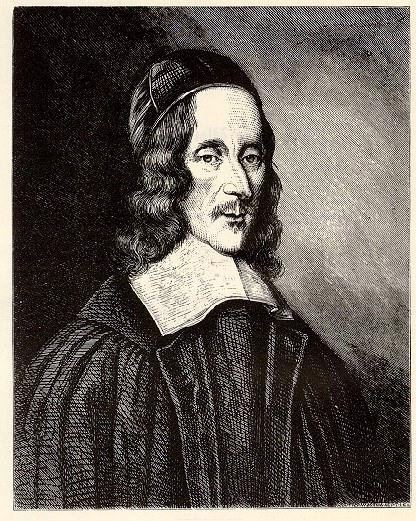

Summary
The Collar is a 36-line lyric from George Herbert's The Temple, the book of religious poems published in 1633, a few months after his death. Its speaker, a man bound to God's service and often read as a priest like Herbert himself, rises in revolt against that service. The poem opens with a gesture: he strikes the board, a table that may be a dinner table or the Lord's table, cries No more, and announces that he will go abroad. Most of the poem is his tirade. He asks whether he must forever sigh and pine, insists that his lines and life are as free as the road and as loose as the wind, and complains that his only harvest is a thorn that draws his blood and gives nothing back. There was wine and corn, he says, before his sighs dried the one and his tears drowned the other; he has no bays or garlands to crown his lost year. Then he turns to his own heart and argues the case for leaving: there is fruit, and you have hands; stop the cold dispute about what is fit; the cage you live in is only a rope of sand that your petty thoughts have twisted into a cable. He tells himself to put away the death's head that reminds him of mortality and to tie up his fears. In the last four lines the rebellion breaks. As he raves more fiercely at every word, he seems to hear one calling Child, and he answers My Lord. Herbert builds the disorder into the verse: line lengths swing between three and ten syllables, rhymes fall at random intervals, and only the closing quatrain settles into regular alternating rhyme, so that the form submits along with the speaker. Readers have long heard puns in the title on the collar or yoke of a working animal, on choler or anger, and on the caller whose single word ends the quarrel.
Virtues in this work
- Humility: After thirty-two lines of protest the speaker answers the Lord's call with the two words My Lord.
- Faith: The speaker's return rests on hearing and trusting a voice, not on winning the argument he has been having with himself.
- Temperance: The poem weighs the heart's plea for double pleasures against the discipline of service and comes down for restraint.
Plot or Argument
- Lines 1-16: the outburst
The speaker strikes the board and declares he will go abroad; he claims his life is free as the road and complains that his service yields only a thorn, with wine and corn lost to sighs and tears.
- Lines 17-26: the heart's case for escape
He tells his heart there is still fruit to take and hands to take it, urges double pleasures, and calls the restraints of conscience a cage and a rope of sands made into a cable by petty thoughts.
- Lines 27-32: the final rant
He repeats that he will go abroad, tells himself to put away the death's head and tie up his fears, and argues that the man who will not serve his own need deserves his load.
- Lines 33-36: the call and the answer
As the raving grows fiercer, he thinks he hears a voice calling Childe, and he replies My Lord; the verse falls at once into ordered rhyme.
Characters
- The speaker, rebellious servant of God
A man, commonly read as a priest, who rages against his vocation and then yields at a single word.
- The caller, the Lord
The voice the speaker seems to hear at the end, addressing him as a child.
Lessons
Freedom is not the same as escape
The speaker equates freedom with going abroad, as loose as the wind; the poem's ending shows him free only when he answers to the one who calls him. Herbert treats the rebellion with full sympathy and lets it speak at length before the single word that answers it.
- What does the speaker think freedom would look like?
- Is the speaker less free or more free after he replies My Lord?
- Why does Herbert give the rebellion thirty-two lines and the answer only four?
The shape of a heart in revolt
The uneven line lengths and scattered rhymes are the speaker's disordered mind made visible, and the regular closing quatrain is order restored. Form here is not decoration but part of the poem's meaning.
- Find the shortest and longest lines. Where do they fall, and what is happening at those moments?
- What changes in the rhyme pattern in the last four lines?
Sons, not slaves
The speaker has been arguing as a servant who wants to be let go, but the voice calls him Childe. The ending changes the relationship he thought he was in, from a hired hand counting his wages to a son addressed by his father.
- Why does the voice say Childe instead of servant?
- How do the speaker's complaints about harvest and lost fruit sound once he is called a child?
Context
Herbert came from a distinguished family; his mother Magdalen was a friend and patron of John Donne, who preached her funeral sermon in 1627. After years seeking preferment at Cambridge and court, Herbert was ordained and in 1630 became rector of the small parish of Bemerton in Wiltshire, where he wrote the prose handbook later published as A Priest to the Temple. The English church of his day was marked by debate over ceremony and worship, and The Temple arranges its poems around the church building, its furniture and its liturgical year.
Composition
The date of The Collar is unknown; it appears in The Temple, printed at Cambridge in 1633. Izaak Walton's Life of Herbert (1670) reports that the dying poet sent his manuscript to Nicholas Ferrar of Little Gidding, asking him to publish it if it might help any dejected poor soul, and otherwise to burn it.
Reception
The Temple went through many editions in the seventeenth century and was loved by readers as different as Richard Baxter and John Wesley, who adapted several Herbert poems as hymns. The Collar became one of Herbert's most anthologized poems in the twentieth century, prized for its dramatic speech and its expressive irregular form, and it is often taught beside Donne's Holy Sonnets as an example of metaphysical devotional verse.
Comparisons
- on-his-blindness
Milton's sonnet also lets a servant of God protest his lot before an answering voice resolves the complaint, though Patience answers calmly where Herbert's Lord speaks one word.
- death-be-not-proud
Donne, a friend of Herbert's mother, argues with Death in a strict sonnet; Herbert argues with God in deliberately broken verse.
- confessions
In Book VIII Augustine's long resistance to conversion ends when he hears a child's voice saying take up and read, a scene of rebellion answered by a call that Herbert's ending echoes.
- gods-grandeur
Hopkins, who admired Herbert, also works his devotion through dense sound and tension, ending on the Holy Ghost's brooding care as Herbert ends on the Lord's call.
Quotes
Frequently cited
“I struck the board, and cry’d, No more. I will abroad.”
Frequently cited
“But as I rav’d and grew more fierce and wilde At every word, Me thoughts I heard one calling, Childe: And I reply’d, My Lord.”
“My lines and life are free; free as the rode, Loose as the winde, as large as store.”
“Have I no harvest but a thorn To let me bloud, and not restore What I have lost with cordiall fruit?”
“Sure there was wine Before my sighs did drie it: there was corn Before my tears did drown it.”
“Forsake thy cage, Thy rope of sands,”
For Students
A reading companion for classical Christian high school students. See the student guide.
Reading Guide
Watch for
- The opening gesture of striking the board and the cry I will abroad, repeated in line 28.
- The harvest images in lines 7-14: thorn, wine, corn, bays and garlands.
- The moment in line 17 when the speaker begins addressing his own heart.
- The death's head in line 29 and what the speaker wants to do with it.
- The single word Childe in line 35 and how the rhyme scheme changes in the last four lines.
Key terms and names
- Board
- A table; in Herbert's day the word could mean both a dining table and the communion table, and the poem leaves both possible.
- Collar
- The restraint of a working animal or a symbol of service; the title also suggests choler (anger) and caller.
- Bays
- Laurel leaves woven into crowns for victors and poets; the speaker has none to crown his year.
- Cordiall
- A restorative, literally something that strengthens the heart; the speaker's fruit restores nothing.
- Death's head
- A skull kept as a reminder of mortality; the speaker wants it called in and put away.
- Rope of sands
- A proverbial image of something with no real strength; the speaker says his scruples are no stronger.
Seminar Questions
- Comprehension What does the speaker do and say in the first two lines?
- Comprehension What does the speaker say happened to the wine and the corn?
- Comprehension What does he hear at the end, and how does he answer?
- Interpretation The thorn, the wine and the corn all have meanings in the Gospels. How do they change the way we read the speaker's complaint?
- Interpretation Why does Herbert write Me thoughts I heard instead of simply I heard?
- Interpretation Which of the possible meanings of the title, collar, choler or caller, best fits the poem's ending?
- Big Question Can a person be truly free while bound to obey someone else?
Faith Connections
- Matthew 11:28-30 (Scripture)
Christ invites the weary to take his yoke, which is easy, and his burden, which is light. The speaker of The Collar feels his yoke as a load he deserves to throw off, until the caller's word changes how it feels.
- 1 Samuel 3:1-10 (Scripture)
The boy Samuel hears his name called in the night and finally answers, Speak, for thy servant heareth. Herbert's speaker also hears a call by night or in confusion and answers with a single act of submission.
- Luke 15:11-24 (Scripture)
The prodigal son goes abroad into a far country and comes to himself; the father calls him son, not hired servant. Herbert's speaker plans the going abroad but is called a child before he leaves.
- Augustine, Confessions VIII.12 (Church Fathers)
Augustine, weeping in a garden after long resistance, hears a child's voice say take up and read, and his struggle ends. The Collar compresses a similar turn into four lines.
Logic and Rhetoric
Central argument: The speaker argues that his service yields only pain, that his restraints are imaginary, and that a man who will not serve his own need deserves his load; therefore he should break away. The poem answers not with a counter-argument but with a call: the one he serves names him child, and the claim that he is a mere servant collapses.
Rhetorical device: rhetorical question. Lines 3-16 pile up questions, such as Have I no harvest but a thorn, which the speaker answers himself until the final voice answers them all.
Debate: Resolved: that the speaker's surrender in the last line is an act of freedom rather than a defeat.
Memory Work
But as I rav’d and grew more fierce and wilde At every word, Me thoughts I heard one calling, Childe: And I reply’d, My Lord.
I struck the board, and cry’d, No more. I will abroad.
Writing Prompts
Essay: Argue how the form of The Collar, its uneven lines and scattered rhymes resolving into an ordered quatrain, carries the meaning of the poem as much as its words do.
Comparison with On His Blindness (Sonnet XIX): Both Herbert and Milton write poems in which a servant of God complains and is answered. Compare the complaint and the answer in each, and argue which poem gives the fuller account of what God asks of his servants.
Medical Lens
Herbert's images draw on the medicine of his day. The thorn that serves only to let blood and the cordial fruit that would restore what was lost set a useless bleeding beside a heart-strengthening remedy, both standard in seventeenth-century practice. The speaker's sighing, pining and tears belong to the period's language of melancholy, and the title is commonly read as including a pun on choler, the hot humor of anger, which the poem enacts as the speaker raves and grows more fierce. These are readings of imagery, not a portrait of illness.
- Lines 7-9
The harvest of thorns that lets blood without restoring anything, set against cordial fruit.
- Lines 3 and 10-12
The speaker's sighing and pining, and the sighs and tears that have dried his wine and drowned his corn.
- Title and lines 33-34
The likely pun on choler and the speaker's mounting rage just before the call.
Creative Prompts
- Classroom
Print the poem without its indentation and ask students to restore the line breaks and indents from memory of the reading. Then compare with the original and discuss what the visual shape adds.
- Poetry
Write a poem of complaint in deliberately irregular lines that resolves, in its last four lines, into a regular rhyme scheme.
Further Reading
- The English Poems of George Herbert, Helen Wilcox (ed.)
Fully annotated edition of The Temple and other English poems.
- The Life of Mr. George Herbert, Izaak Walton
Walton's 1670 life, the source of the story of the manuscript sent to Nicholas Ferrar.
- Music at Midnight: The Life and Poetry of George Herbert, John Drury
Verification notes
Publication in The Temple (1633) and Herbert's biography are standard. The date of composition is unknown. The puns on collar, choler and caller are a long-standing critical reading, not something Herbert states; the speaker's identification as a priest is likewise an inference from Herbert's life and the poem's images. Quotes and line numbers follow the stored 1633-spelling text.
No verification flags recorded.